

.png)


Best Locks for Work Vans That Stop Break-Ins

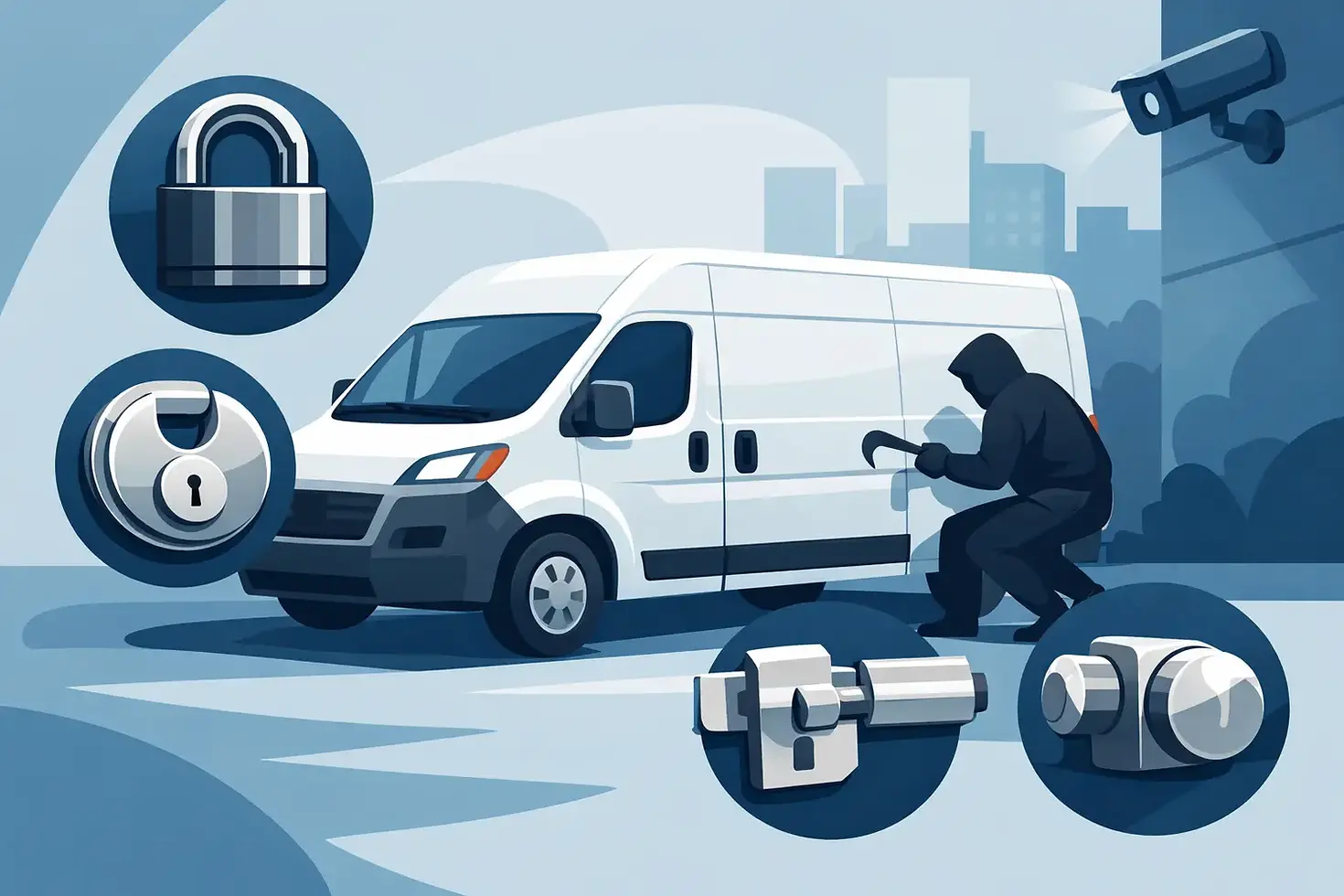
A thief does not need long with a parked van. A screwdriver at the door edge, a pry bar on the seam, and factory central locking stops mattering fast. That is why the best locks for work vans are not the ones that look impressive on a spec sheet. They are the ones built for the way vans actually get attacked.
If you carry tools, parts, test gear, or job materials, the lock choice is not cosmetic. It affects whether you start work tomorrow or spend the morning filing a police report, calling insurance, and replacing equipment you already paid for once. For most tradespeople and fleet operators, the right answer is not a single lock type. It is layered physical security that stays locked even if the van’s OEM system is defeated.
What makes the best locks for work vans
A good van lock has one job: keep the door shut under force. That sounds obvious, but many products focus too much on convenience and not enough on attack resistance. Work vans are commonly targeted at the side load door and rear cargo doors because they give quick access to tools and are often easier to pry than the cab.
The best locks for work vans are usually independent of the factory locking system. That matters because thieves often attack factory locks electronically or mechanically, then use the door’s weak points to peel or spread the panel. If your added security only mirrors the factory system, it can fail with it. An independent deadbolt changes that. It adds a separate physical locking point that remains engaged even if the original lock is compromised.
Material thickness matters. Bolt throw matters. Fixing position matters. So does how visible the hardware is from outside the van. Big external fittings can act as clues, and in some cases, attack points. A more discreet setup can be a better option when it keeps the security hardware hidden while still reinforcing the door where forced entry happens.
Deadlocks are usually the strongest starting point
If you want a hard answer, start with deadlocks. For many users, they are the best balance of strength, simplicity, and independence. A proper van deadlock throws a solid bolt into a keep and is not controlled by the standard central locking motor. That means it stays as a separate barrier.
For tool theft prevention, this matters more than extra convenience features. A thief wants speed. If the side or rear door will not spread open after the factory lock is bypassed, the attack becomes louder, slower, and higher risk. That alone is often enough to make them move on.
Not all deadlocks are equal, though. Some are basic add-ons with limited reinforcement around the mounting point. Better systems are designed specifically for van doors, use heavy-duty steel hardware, and place the bolt where the door is most likely to be pried. On newer vans with known side-door weaknesses, a deadlock works best when paired with anti-peel protection rather than used alone.
Remote-controlled deadbolts are another strong option when they are engineered correctly. They can give you the independence of a deadlock without forcing the driver to manually key every cargo door each time. The key point is not the remote itself. The key point is whether the deadbolt is still a true physical lock, separate from OEM locking, with secure electronics and reliable engagement. Convenience is useful only if the lock still does the heavy work under attack.
Slam locks are useful, but they are not always the best fit
Slam locks have a clear advantage for delivery drivers, mobile service teams, and anyone making repeated stops. Shut the door and it locks automatically. That reduces the chance of leaving a van unsecured while carrying equipment into a site.
That said, slam locks solve a different problem than high-strength deadlocks. They are excellent for human error and routine access control. They are not automatically the best choice for resisting aggressive pry attacks unless the specific product is built for that purpose. Some operators also find them less practical if they need frequent open-close access while working from the van and do not want to manage repeated lock cycles.
For some fleets, the right setup is slam locks on high-use doors and deadbolts on vulnerable cargo access points. It depends on the route, the value of the load, and whether the van is left unattended in public areas for short or long periods.
Hook locks have a place, but door design matters
Hook locks are often chosen because the hook-shaped bolt can create strong engagement against forced pulling. On the right door and with proper installation, they can be effective. They are widely used across commercial vans for that reason.
The trade-off is that performance depends heavily on the geometry of the door, the keep, and the mounting area. Some vans benefit more from a straight deadbolt with reinforced fixings. Others can use a hook mechanism effectively. The lock type alone does not tell the full story. Vehicle-specific design matters more than catalog claims.
If you are comparing hook locks against deadlocks, do not treat it like a universal winner-loser decision. Look at your van model, your door layout, and the attack method you are trying to stop. A lock that works well on a rear door may not be the best answer for a sliding side door with peeling risk.
Anti-peel protection is not optional on vulnerable side doors
A lot of van theft is not sophisticated. It is violent. Thieves attack the top or edge of the sliding side door, peel it back, and create enough of a gap to reach inside, release mechanisms, or remove tools. If your van model is known for that weakness, adding a lock without addressing peel attack is only part of the job.
This is where anti-peel brackets earn their place. They reinforce the door edge and reduce the ability to bend the panel away from the body. Used with an independent deadbolt, they make the side door much harder to distort and much harder to force open. That combination is often stronger than relying on any single lock upgrade by itself.
From a real-world security standpoint, this is one of the clearest cases where layered protection beats chasing one “best” product. If the door skin can be folded back, the lock is being asked to compensate for a structural weakness. Better to strengthen both.
Hidden security usually beats obvious hardware
A lot of buyers assume visible locks deter thieves. Sometimes they do. Sometimes they simply advertise that there may be expensive tools inside. External hasps and exposed fittings can also create known attack points if they are not designed well.
A cleaner approach is concealed or low-profile security that does not give away the locking layout from the outside. For work vans parked at homes, hotels, supply houses, and job sites, discreet protection makes sense. The van looks standard, but the cargo doors are backed by heavier independent hardware.
That is one reason specialist systems from companies like Van Security Systems stand out. The engineering focus is not on decorative hardware. It is on adding a serious physical barrier without giving thieves extra clues.
Installation quality matters as much as the lock itself
Even the best hardware can underperform if it is badly fitted. Poor alignment, weak fasteners, or mounting into thin unsupported sections will reduce the benefit fast. On a work van, a lock is only as strong as the way it is anchored to the door and frame.
That does not mean every owner needs a complicated shop install. Plug-and-play kits built for specific van models can make a lot of sense because they reduce guesswork and fitting errors. But they still need to be installed exactly as intended. A clean, vehicle-specific fit is not just about saving time. It is part of the security performance.
The right choice depends on how the van is used
A solo contractor carrying high-value tools overnight has different needs than a fleet van making 30 stops a day. If theft risk is highest when the van is parked at home or on the street overnight, independent deadbolts and anti-peel reinforcement should be at the top of the list. If risk comes from frequent stop-start access, slam locks may deserve a bigger role.
If you run a fleet, key management, driver behavior, and installation consistency also matter. Standardizing on one system across multiple vans can simplify training and maintenance, but only if the hardware suits the actual vehicle models and attack risks.
The best locks for work vans are the ones matched to the door, the van, and the way you work. That usually means a heavy-duty independent deadbolt as the core, anti-peel protection on vulnerable side doors, and automatic locking only where it genuinely improves security discipline.
Tool theft is expensive because it hits twice - once when the gear is stolen and again when the work stops. Buy security the same way you buy tools: for the job it has to do, not for the packaging. A van that stays closed under attack is the one that keeps earning.


Comments