


Best Van Alarm Alternatives for Tool Security

A siren going off at 2 a.m. does not keep a crowbar out of your side door. By the time anyone notices an alarm, a thief may already have your tools and be driving away. The best van alarm alternatives focus on stopping entry in the first place, especially when a van carries the equipment needed to earn a living.
An alarm still has a place in a layered security setup. It can create attention, record an event, and deter an opportunist. But alarms rely on a thief caring about noise, nearby people responding, and the vehicle's electrical system remaining intact. Professional tool thieves often work quickly, know where factory locks are weak, and target doors rather than windows.
For trade vans, physical security is normally the first upgrade to consider. The right combination depends on where the van is parked, the value of the load, and the attack methods common in your area.
Why van alarms are not enough on their own
Most van alarms are tied into the vehicle's factory locking and electrical systems. If the central locking is defeated, a door is peeled back, or the alarm is ignored, the system has not physically prevented access. Even a loud alarm cannot replace a lock that keeps the door closed under force.
This is the key difference between detection and prevention. An alarm detects unauthorized entry. A physical security device is designed to resist it. If your van contains power tools, testing equipment, parts inventory, or specialist machinery, prevention has to be the priority.
Factory door latches were designed for everyday use, not repeated attacks with pry bars. Rear and sliding side doors can be particularly vulnerable because they offer large leverage points. A thief does not need to defeat every lock on the vehicle. They need one opening large enough to remove valuable equipment.
Best van alarm alternatives that stop forced entry
Independent remote-controlled deadbolts
An independent deadbolt is one of the strongest alternatives to a conventional alarm because it does not rely on the factory locking system to stay secure. It adds a separate locking point that holds the door in place even if the original latch or central locking has been compromised.
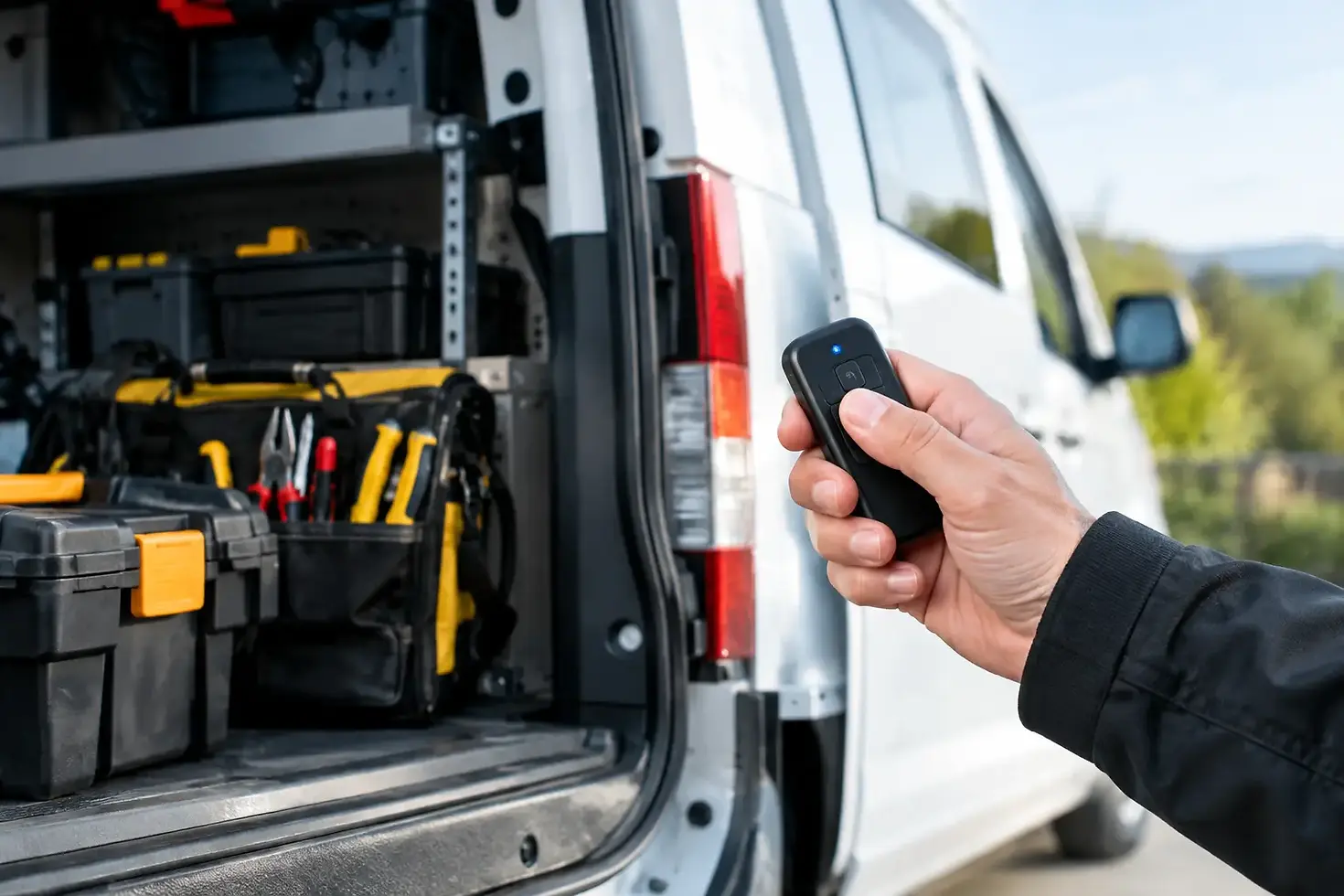
For practical use, remote-controlled deadbolts are a better fit than a manual padlock-style arrangement. They can be operated with a secure remote while allowing normal access to the load area. The important point is independence: the deadbolt should remain locked regardless of what happens to the van's standard locks.
Look for heavy-gauge steel components, a substantial bolt throw, concealed fitting, and hardware designed for the specific door it will protect. A visible external lock may deter some thieves, but it can also advertise where to attack. Concealed deadbolt systems avoid creating an obvious exterior target while adding resistance behind the door skin.
Van Security Systems builds its security around this principle: an independent deadbolt should keep working as a separate barrier when factory locking is no longer enough.
Anti-peel brackets for sliding and rear doors
Door peeling is a direct, destructive attack. A thief forces the top or edge of a door outward, creating a gap that can be widened until tools can be removed. On some vans, this can happen without opening the factory lock at all.
Anti-peel brackets reinforce the vulnerable area where leverage is usually applied. They are not a replacement for a deadbolt. Their job is different. A deadbolt resists the door opening, while an anti-peel bracket makes it harder to start and continue the bend that creates access.
This is especially worthwhile on vans with sliding side doors, where thieves can use the door's geometry against it. Choose brackets that are formed from thick steel, mounted through strong structure, and designed around the vehicle's door profile. A universal piece of thin metal is not the same as a properly engineered anti-peel solution.
Internal load-area security
If a thief does get through an outer door, a second internal barrier can protect the most valuable equipment. Tool vaults, lockable storage drawers, and internal cages do not prevent vehicle damage, but they can stop a fast theft from becoming a total loss.
This option makes sense for high-value diagnostic equipment, specialist power tools, or compact items that are easy to grab. It also helps organize the load area and reduces the temptation to leave expensive tools visible through windows.
There is a trade-off. Internal storage adds weight, takes up room, and may slow down access during a busy workday. It is best used for the tools that would be hardest or most expensive to replace, rather than every item in the van.
GPS tracking and recovery systems
A tracker is not a door security device, but it is a useful alternative when the concern is vehicle theft rather than a quick tool raid. A properly installed, concealed tracker can improve the chance of locating a stolen van and can alert the owner when it moves outside set hours or locations.
Do not treat tracking as a substitute for physical protection. Recovery may take time, and your tools may be gone long before the vehicle is found. Trackers work best alongside independent locks and reinforced doors, not instead of them.
For commercial operators, a fleet tracking system can also identify repeated parking risks, unauthorized use, and vehicles left in vulnerable locations. That operational information can be as valuable as the recovery function.
Security lighting and parking controls
Where you park matters. A van left overnight in a dark side street is a simpler target than one backed tightly against a wall, parked under lighting, or kept in a monitored yard. This is not a hardware solution, but it reduces the opportunity for a thief to work without interruption.
Use lighting that covers the side and rear doors, not just the front driveway. If possible, park with the sliding door against a wall or another vehicle and restrict access to rear doors. A camera can provide evidence, but visible lighting and controlled parking are more likely to discourage an attack before it begins.
Match the security to the attack
The best setup depends on what you are trying to stop. A practical approach is to match each layer to a known risk:
Crowbar attacks need independent deadbolts that hold the door shut under force.
Door peeling needs anti-peel brackets and reinforcement at likely leverage points.
Theft of the whole vehicle needs a concealed tracker and sensible parking controls.
Quick grab-and-go theft needs hidden storage, internal tool vaults, and no visible equipment.
This is why a single alarm rarely solves the problem. It covers one stage of an incident: making noise after intrusion is detected. A layered setup gives the thief more barriers to defeat, more time exposed to view, and more reasons to move on.
What to check before buying van security hardware
Vehicle-specific fitment matters. A system designed for a Ford Transit may not mount correctly on a Mercedes Sprinter, Ram ProMaster, Volkswagen Crafter, or other commercial van. Check the model year, wheelbase where relevant, door configuration, and whether the product is intended for sliding, rear, or both doors.
Installation should also be realistic. The strongest hardware is of little use if it requires complicated fabrication, leaves exposed weak points, or interferes with normal operation. Plug-and-play systems with clear mounting points reduce fitting time and make it easier for an owner-operator or professional installer to complete the job correctly.
Do not judge a lock by appearance alone. Ask what material it uses, how it resists leverage, whether its electronics are independent of the vehicle, and what happens if factory central locking is bypassed. Those answers tell you more than an alarm's decibel rating.
A good security upgrade should not turn every workday into a routine of keys, chains, and awkward door access. It should add serious resistance while remaining quick to operate when you are loading up before dawn or locking down after the final job.
The useful question is not whether an alarm is better than a lock. It is whether your van still protects the tools inside after someone has decided to ignore the alarm. Start with the doors, reinforce the attack points, and make your van a harder job than the one parked next to it.


Comments