


Cargo Protection Options for Commercial Vans

A van full of tools is not just cargo. It is your ability to work tomorrow morning. That is why cargo protection options need to cover two separate problems: keeping equipment secure while the vehicle is moving, and stopping thieves from getting through the doors when it is parked. A ratchet strap will not defeat a crowbar. A strong door lock will not stop unsecured equipment from becoming a projectile in a hard stop.
The right setup depends on what you carry, where the van is parked, and how often the load changes. A contractor carrying fixed toolboxes has different requirements from a delivery operator handling loose stock all day. The objective is the same: keep the cargo inside the van, protected from damage, unauthorized access, and costly downtime.
Start by Separating Cargo Safety From Theft Protection
Cargo restraint is about control in transit. It prevents cases, machines, ladders, shelves, and stock from shifting under braking, cornering, or impact. Theft protection is about preventing entry and delaying attack long enough that the thief gives up or is detected.
Both matter, but they use different hardware. Tie-down rails, straps, partitions, shelving, and floor-mounted anchors manage the load. Deadbolts, anti-peel brackets, alarms, tracking devices, and external lighting address theft risk. Treating these as one job usually leaves a weak point somewhere in the vehicle.
A well-fitted bulkhead is a good example. It keeps cargo out of the cab during an accident and prevents easy access from the front seats. It does not, by itself, stop an attacker from peeling open a side door or forcing a rear door. Each layer needs to do its own job.
Cargo Protection Options That Work Together
There is no single product that makes a work van secure. The practical approach is a layered system built around the threats your vehicle faces. For most trade vans, the main cargo protection options are:
Load restraint hardware, including anchor points, rails, ratchet straps, and netting for loose or changing loads.
Racking, drawers, lockable cabinets, and bolted-down tool storage that reduce movement and slow down removal.
A full-height bulkhead that separates the cargo area from the cab and adds a structural barrier.
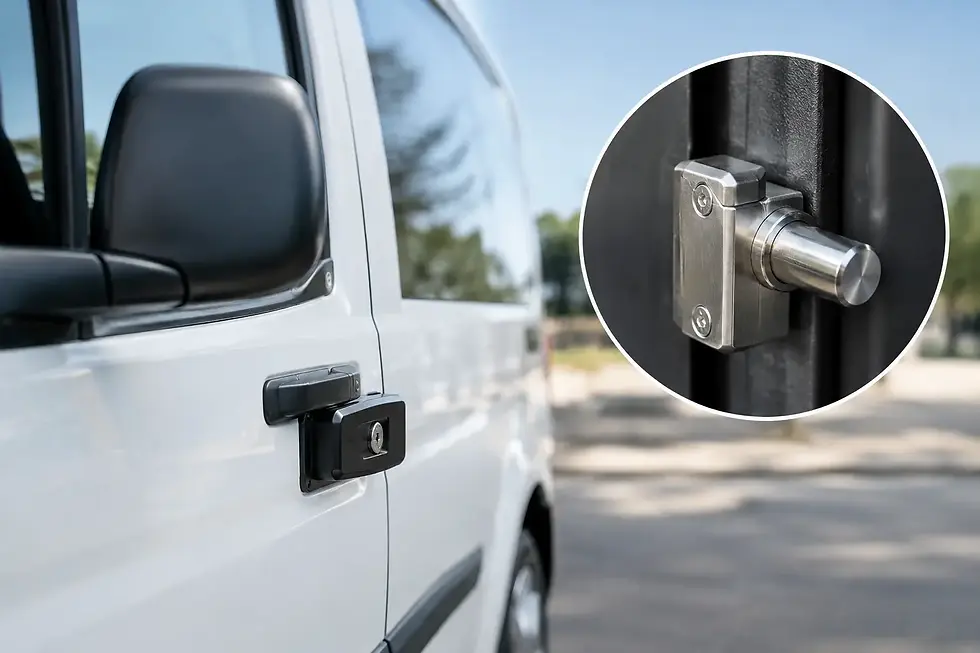
Door security, including independent deadbolts and anti-peel hardware designed for forced-entry attacks.
Electronic deterrents, such as an alarm, tracking system, interior motion detection, and visible site lighting.
Not every van needs every item. A courier van may prioritize fast-access load restraint and a partition. A plumbing, electrical, or construction van carrying high-value power tools should put serious emphasis on physical door security and locked internal storage.
Secure the Doors Before Securing the Cabinets
The factory central locking system is built for normal vehicle use. It is not necessarily designed to resist repeated leverage, drilling, lock attack, or a crowbar driven between the door and body. If the factory lock is bypassed, the cargo area can be open in seconds.
That is why independent physical locking matters. An independent deadbolt remains a separate barrier from the vehicle's original locking system. Even if a thief compromises the OEM lock, the deadbolt still has to be defeated. This changes the attack from a quick opportunistic break-in to a noisy, difficult, time-consuming job.
Remote-controlled deadbolts can provide this extra layer without adding an exposed external lock cylinder or visible attack point. When designed for the vehicle and fitted correctly, the lock hardware is concealed, the locking action is direct, and the system can be operated without changing the normal routine of loading and unloading.
Side-load doors deserve particular attention. Door peeling is a common forced-entry method because it attacks the edge of the door rather than the factory lock. The attacker creates a gap with leverage, bends the skin and frame, then reaches the latch or accesses the cargo area. An anti-peel bracket reinforces the vulnerable area and makes that leverage attack far more difficult.
Rear doors should not be ignored simply because they are harder to reach in a tight parking space. Thieves choose the easiest available point of entry. Secure the side door and leave weak rear doors unprotected, and the attack simply moves to the back of the van.
Van Security Systems builds vehicle-specific remote deadbolt and anti-peel hardware around this principle: independent, concealed physical security that does not rely on the factory locking system remaining intact.
Keep Equipment From Moving and Make It Harder to Remove
Once the doors are protected, deal with what happens inside. Loose cargo is a safety problem first, but it also makes theft easier. A thief can grab an unrestrained tool case and leave quickly. Equipment secured to a racking system, behind a locked cabinet, or through a fixed anchor takes more effort to remove.
For variable loads, install rated tie-down points or cargo rails where they can carry force into the vehicle structure. Do not rely on light trim panels, plastic hooks, or improvised loops. Use straps with a working load limit appropriate for the equipment, inspect them for cuts and damaged ratchets, and keep them tight enough to prevent movement without crushing cases or stock.
For fixed tools, bolted racking and steel storage drawers are usually the better option. Keep heavy generators, compressors, cable reels, and large cases low and close to the bulkhead where practical. Weight placed high or at the rear affects vehicle handling and increases the force placed on restraints during sudden braking.
Lockable cabinets add another delay layer, but they are not a substitute for door security. If the van door can be peeled open easily, an internal cabinet may only give a thief more time to work in cover. Protect the vehicle shell first, then use internal storage to protect the highest-value items.
Do Not Overlook the Everyday Weak Points
Security fails when it is inconvenient. A system that takes too long to operate will eventually be left unlocked during a quick stop. Choose hardware that fits how the van is actually used: multiple deliveries, site visits, overnight parking, or long periods left unattended.
Also look beyond the doors. Windows can expose tools and show thieves exactly what is inside. A clean cargo area, opaque rear window covers where legal, and sensible equipment layout reduce visual temptation. Remove serial number records, tool inventories, and proof of ownership from the van, but keep them stored securely elsewhere. Marking equipment and recording serial numbers will not stop an attack, but it improves recovery and insurance reporting after a theft.
Parking strategy matters too. Backing the van close to a wall can reduce rear-door access. Parking the side-load door away from open space can make a peeling attack harder to carry out. Well-lit areas with active foot traffic are generally better than isolated corners, although physical security should never depend on location alone.
Choose Hardware for the Van, Not a Generic Promise
Commercial vans have different door skins, hinge layouts, internal braces, wiring routes, and opening clearances. A universal product may fit, but fit is not the same as effective protection. Vehicle-specific hardware is more likely to place the locking point where the structure can support it, avoid interference with normal door operation, and provide a cleaner installation.
Before buying, identify your exact vehicle model, wheelbase, roof height, and door configuration. Confirm whether you have one or two sliding doors, rear barn doors or a tailgate, internal racking, and any existing alarm or tracking equipment. This prevents buying security hardware that clashes with shelving, trims, or access requirements.
Installation quality is just as important as the product. Mounting points must be secure, wiring must be protected from damage, and the door must close and release correctly every time. Test the system with the van loaded, because a shifted shelf or overhanging case can interfere with locks and latches. If the system uses remotes, keep a controlled spare and remove lost remotes from service immediately.
The cost decision should include more than the price of the hardware. One break-in can mean replacement tools, lost work, a damaged door, an insurance claim, and days without a usable van. The best protection is the setup that reduces those risks without slowing down the work that pays for the vehicle.
Build your protection around the attacks and loads your van faces most often. Secure the doors against forced entry, restrain the cargo for the road, and make every layer simple enough to use at the end of a long day. That is how a work van stays ready for work.


Comments