


How to Protect Equipment During Overnight Parking

A van full of tools parked overnight is not just a vehicle. It is tomorrow’s payroll, scheduled jobs, customer commitments, and the equipment that keeps your business moving. To protect equipment during overnight parking, you need more than a locked door and a good parking spot. You need physical security designed for the way commercial vans are actually attacked.
Factory central locking is convenient, but it was not built as a standalone defense against a thief with a pry bar, screwdriver, or the leverage to peel a side door. Once an attacker gets past the factory lock or opens a weak point in the door skin, the contents are exposed. The practical answer is layered protection that makes forced entry slower, louder, and far less rewarding.
Why Overnight Parking Creates a Higher Risk
A work van is most vulnerable when it is parked for hours without anyone nearby to react. Driveways, hotel lots, job sites, storage yards, and street parking all present different risks, but the problem is the same: thieves have time to inspect the vehicle and choose an attack point.
Side loading doors are a common target because they provide broad access to tools and stock. Rear doors are another weak point, particularly on vans with exposed lock areas or flexible door edges. A thief does not always need to defeat the factory lock cylinder. Forced-entry methods often work around it by prying the door, spreading the seam, or peeling back the upper corner until the latch releases.
That is why visible factory locking alone is not a security plan. If the vehicle’s original locking system is bypassed, an independent deadbolt can remain engaged and keep the door shut. This changes the attack from a quick break-in into a difficult, high-risk attempt.
Protect Equipment During Overnight Parking With Layers
The strongest setup combines good parking decisions with hardened physical protection. No single product or habit eliminates risk, but each layer removes an easy opportunity.
Start with where the van is parked. Choose a well-lit area with regular foot traffic, active cameras, controlled entry, or a clear view from your home or accommodation when possible. Avoid parking with the side door facing a hidden wall, alley, hedge, or another vehicle. Thieves want cover and room to work. Make them operate in an exposed position instead.
Parking position matters, but it cannot replace hardware. A van may need to sit at a job site, a hotel, or a public lot where ideal placement is not available. In those situations, physical door protection becomes the layer you control.
An effective overnight setup should address three separate issues: defeating the original lock, forcing the door open with leverage, and removing valuable items quickly after entry. Independent deadbolts address the first issue. Anti-peel brackets reinforce a known attack area. Secure internal storage limits the loss if an attacker gets through another point.
Use Independent Deadbolts on Access Doors
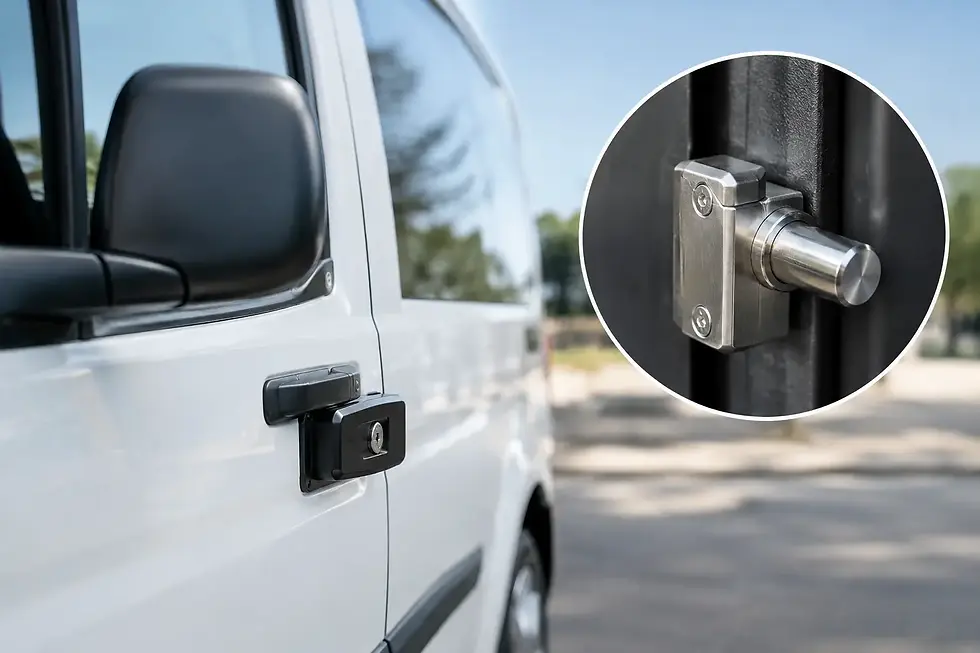
An independent deadbolt is not tied to the factory central locking system. It adds a separate locking point that holds the door closed even if the OEM latch is compromised. This is critical because many attacks are aimed at bypassing or damaging the original latch rather than picking a lock.
For overnight security, remote-controlled deadbolts offer a practical advantage. You can lock all protected doors without walking around the vehicle and checking multiple external lock cylinders. A properly designed system should use secure rolling-code remotes, strong steel hardware, and a mounting arrangement that cannot be easily accessed from outside.
The goal is not to make a van look heavily armored. Visible security can sometimes advertise that valuable equipment is inside. Concealed exterior protection gives thieves fewer obvious points to attack while retaining the strength needed to resist prying and crowbar force.
Choose a system made for your exact vehicle door configuration. Door construction, internal bracing, latch position, and clearance vary between a Transit, Sprinter, Crafter, Boxer, and other commercial vans. A universal part that requires cutting, improvising, or extensive fabrication can create fitting problems and weak installation points. Vehicle-specific, installation-ready hardware is the better route.
Reinforce the Side Door Against Peeling
Door peeling is not a subtle attack. The thief forces a gap at the top or rear edge of a sliding side door, bends the outer skin, and reaches toward the latch area. It is fast when the door has no reinforcement and expensive to repair even when the thief fails to remove anything.
An anti-peel side door bracket reinforces the vulnerable edge and limits how far the door can be pulled away from the body. It works best as part of a system, not as a substitute for a deadbolt. The bracket helps resist deformation and access. The deadbolt provides a solid independent point holding the door closed.
This combination is particularly useful for vans carrying high-value trade tools, diagnostic gear, testing equipment, mobile stock, or specialist machines that cannot be replaced overnight. The cost of stolen equipment is only part of the damage. Missed work, emergency purchases, rescheduled jobs, and insurance disruption can cost more than the tools themselves.
Secure What Is Inside the Van
Door security should be your first line of defense, but internal storage gives you a fallback. Lockable tool chests, bolted storage boxes, and secured racking make it harder for an intruder to grab and run. This is especially useful for compact items such as power tools, meters, laser equipment, laptops, and diagnostic devices.
Do not leave tool cases in direct view through windows. If your van has rear or side glass, use internal screening or arrange the load so valuable items are not visible. Remove the highest-value portable equipment whenever it is realistic to do so. It depends on the job, the weight of the equipment, and the time available, but a laptop or high-value test unit should not be left in the van simply because it is inconvenient to carry.
Build an Overnight Routine That Does Not Get Skipped
Security hardware only works when it is used every time. The most common failure is not a broken lock. It is a rushed operator leaving one door unsecured after a long day.
Use the same short routine whenever the van is parked overnight:
1. Remove cash, keys, laptops, and small high-value equipment.
2. Check that side and rear doors are fully closed before locking.
3. Engage the independent deadbolt system and confirm the lock cycle has completed.
4. Park with the most vulnerable door facing a visible, restricted, or obstructed area where possible.
5. Keep vehicle keys and security remotes away from doors and windows inside your home or hotel room.
For fleet operators, the routine should be written into end-of-shift procedures. Drivers need to know which doors are protected, how the remote system operates, what a normal lock indication looks like, and who to contact if a lock is damaged. Security equipment should also be inspected during regular vehicle checks. Look for loose fasteners, bent brackets, damaged door edges, and signs that someone has tested the vehicle.
Match the Protection to Where You Park
A contractor parking on a residential driveway faces a different risk than a service fleet operating from an open yard. At home, lighting, cameras, and smart parking position may be easy to control. At a job site, the focus may be on hardened doors and removing the most portable tools. At a hotel or public lot, use the most visible space available and avoid leaving the van unattended for extended periods after checking in.
High-risk areas justify more layers, not just more warnings. A sticker, alarm, or camera may deter an opportunist, but determined thieves look for the fastest route through a door. Physical hardware is what forces that route to fail or take long enough to attract attention.
Van Security Systems builds independent deadbolt and anti-peel protection around that real-world problem: keeping access doors secure when factory locking is no longer enough. Heavy-duty, vehicle-specific hardware gives working van owners a practical defense against the attacks that put tools and livelihoods at risk.
The best time to improve overnight security is before the first theft attempt. Park smart, lock every access point, and make sure the door still holds when someone tries to force it open.


Comments