


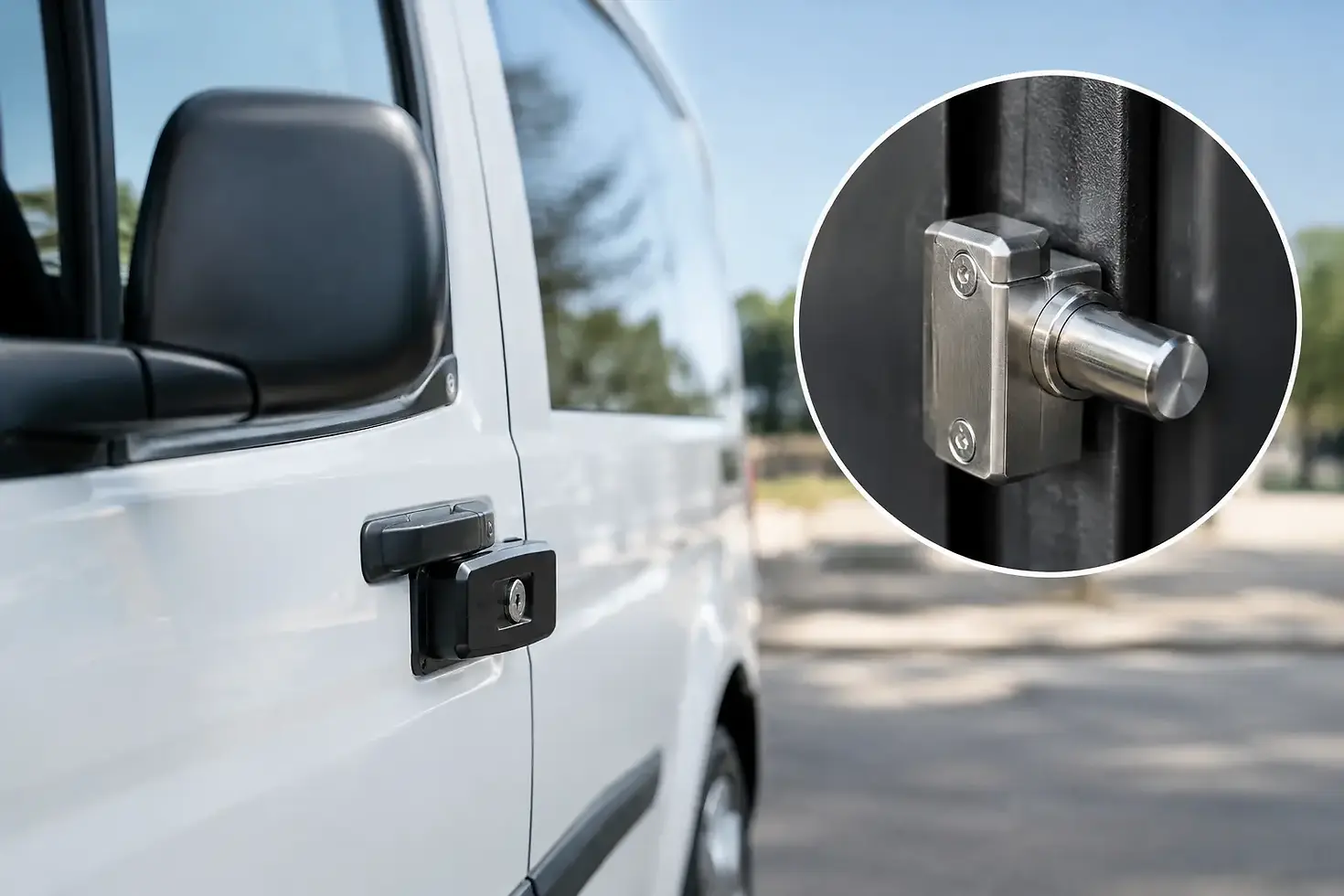
Vehicle Deadbolts That Stop Van Break-Ins

A stolen drill is expensive. A van emptied overnight can stop a job, delay customers, create insurance work, and leave a business without the equipment it needs to earn. Vehicle deadbolts are built for that problem: forced entry at the rear or side door after a thief has defeated, bypassed, or ignored the factory locking system.
Standard van locks are designed for day-to-day access. They are not always designed to withstand a determined attack using a crowbar, leverage against a door edge, or peeling at the side loading door. A proper deadbolt adds a separate physical locking point that holds the doors closed independently of the vehicle's original central locking.
Why Factory Van Locks Are Not Enough
Factory locks are convenient, but convenience is not the same as security. On many commercial vans, the central locking system controls multiple doors through linked mechanisms, cables, and electronic components. If a thief gains access to one weak point, compromises the lock barrel, or creates enough movement in the door, the original system may no longer provide meaningful resistance.
The weak area is often not the visible keyhole. It can be the door seam, the rear-door join, the side-door leading edge, or the sheet metal around the latch. These are the areas attacked when thieves use force rather than trying to pick a lock.
A deadbolt changes the attack. Instead of relying only on the factory latch, the door is held by a dedicated bolt engaging into a reinforced receiver. The door cannot simply be pulled away from its normal latch position. The thief now faces a separate, concealed locking system designed specifically to resist leverage.
That distinction matters. An alarm may draw attention, but it does not keep a door shut. A factory alarm and central locking system still have value, but they should not be the only line of defense for a van carrying tools, test equipment, stock, or specialist machinery.
What Vehicle Deadbolts Actually Do
Vehicle deadbolts are independent locking units fitted to commercial vehicle doors. When activated, a hardened or high-strength bolt moves into a receiving bracket or keeper fixed to the opposing door frame or door section. This creates a mechanical barrier separate from the OEM latch.
On a rear-door installation, the deadbolt prevents the doors from being forced apart at their meeting point. On a sliding side door, it prevents the door from being levered outward or pulled open once the factory lock has been attacked. The exact mounting position depends on the van model and door layout, but the purpose stays the same: keep the doors physically locked in place.
Remote-controlled systems give the driver a practical way to operate that extra layer of protection. A secure rolling-code remote can lock and unlock the deadbolts without adding an exterior key cylinder or visible padlock hasp. That keeps daily use simple while avoiding an obvious external attack point.
The best systems are designed to remain locked even if the original vehicle locking system is compromised. That is the real value of independent security. The van's factory locks can still be used normally, but the deadbolt is not relying on them to stay engaged.
The Attacks a Deadbolt Must Resist
Not every van break-in is the same, so a security upgrade should be judged against the methods used on working vehicles.
Crowbar attacks rely on creating a gap at the door seam, then applying leverage until the latch, door skin, or surrounding metal gives way. A deadbolt located away from the factory latch makes that approach harder because the door remains secured at another point.
Door peeling is particularly damaging on sliding side doors. The attacker bends the upper or leading section of the door outward to create access to the load space. An anti-peel bracket works with a deadbolt system by reinforcing the vulnerable door area and limiting the movement needed to start the peel.
Lock attacks target barrels, handles, and factory mechanisms. A deadbolt does not make those parts indestructible, but it reduces the payoff. Even if the original lock is damaged or bypassed, the independent bolt can continue to hold the door closed.
No physical security product makes a van impossible to attack. Given enough time, noise, and tools, any vehicle can be damaged. The objective is to increase the time, effort, and risk required to gain entry. Most thieves look for the quickest opportunity. A van that resists the usual forced-entry methods is a less attractive target.
What to Look for in a Van Deadbolt System
The bolt itself is only one part of the system. The housing, receiver, mounting hardware, wiring, and vehicle-specific brackets all determine how the installation performs under load.
Start with material strength and mounting design. Heavy-gauge steel components, reinforced keepers, and substantial fixings matter because force is transferred through the entire assembly. A strong bolt fitted to weak mounting points is not a strong security solution.
Concealment is equally important. Exterior puck locks and visible hasps can be effective, but they advertise where the security hardware is located. A concealed deadbolt system does not provide a convenient exposed point for cutting, drilling, or levering. It also keeps the outside of the van cleaner for branded vehicles and fleet operations.
Then consider how the system is controlled. A remote deadbolt should use secure rolling-code operation rather than a fixed signal that can be copied. It should also be easy to confirm whether the system is locked before walking away. Practical security is security that gets used every day.
Vehicle-specific fitment matters more than universal claims. The contours, internal structure, door travel, and wiring routes differ between a Ford Transit, Mercedes Sprinter, Ram ProMaster, Volkswagen Crafter, and other commercial vans. Purpose-built brackets and installation-ready hardware reduce guesswork and help position the bolt where it can do its job.
Installation Is Part of the Security
A deadbolt system needs to be fitted accurately. The bolt must align cleanly with its receiver when the doors are fully closed, without binding or placing unnecessary load on the actuator. Poor alignment can cause unreliable locking, premature wear, or a door that becomes difficult to operate.
Plug-and-play electrical connections reduce the chance of cutting into factory wiring or introducing unreliable splices. For a working van, that means less installation time and fewer potential electrical faults later. It also makes the system more realistic for owners who want strong security without an extended vehicle downtime period.
Before fitting, inspect the doors for existing damage, sagging hinges, poor latch alignment, or previous break-in repairs. A bent sliding door or damaged rear-door edge should be corrected first. Security hardware performs best when it is fitted to doors that close squarely and consistently.
After installation, test the system with the vehicle parked on level ground and with the doors under normal closing pressure. Check remote operation, manual release procedures if supplied, cable routing, fastener tightness, and clearance through the full door travel. Repeat those checks periodically, especially on vans used on rough job sites or high-mileage routes.
Deadbolts Work Best as Part of a Layered Setup
Deadbolts are the main physical barrier, but the strongest approach combines several sensible measures. An anti-peel bracket protects the side door area where leverage attacks often begin. A visible alarm sticker, internal load-space alarm, tracking system, and secure parking routine can add further deterrence and recovery support.
Still, priorities matter. Tracking may help recover a stolen vehicle, but it does not stop tools being removed. An alarm may alert someone nearby, but it cannot hold a forced door shut. For tool theft, physical door security should come first because it directly targets the point of entry.
Fleet operators should also think about consistency. Different locks on different vans create training issues and increase the chance that a driver leaves one system unsecured. A standardized remote deadbolt setup makes daily checks simpler and gives every vehicle a comparable level of protection.
Choose Security for the Work You Carry
The right setup depends on the vehicle, door configuration, where it is parked, and the value of the load. A plumber carrying everyday hand tools has a different risk profile from a mobile diagnostic technician with specialist electronic equipment, but both can lose days of work after a forced entry.
At Van Security Systems, the focus is on independent, concealed deadbolt protection engineered for the attacks trade vans actually face. The goal is not to make a van look heavily armored. It is to make forced entry slower, harder, and far less worthwhile.
A deadbolt is most valuable before the break-in attempt, not after it. Fit security that holds the door closed when the factory lock is no longer enough, then make checking it part of the last routine before you leave the van.


Comments