


Upgrade Van Rear Door Locks That Fight Back

A factory central locking system was built for convenience, not for stopping a determined attack on a loaded work van. When you upgrade van rear door locks, the objective is not simply adding another key or alarm. It is fitting an independent physical barrier that keeps the doors shut when factory locks, handles, or wiring have been defeated.
For a contractor, technician, or fleet operator, rear-door security is about protecting the equipment that keeps the business moving. A stolen drill kit is expensive. Lost time, missed appointments, replacement tools, and an immobilized vehicle cost more. Rear doors need hardware designed around the way thieves actually force entry.
Why factory rear door locks are a weak point
Most van rear doors rely on latches controlled by the original locking system. That arrangement is practical for daily use, but it gives an attacker a known target. If they gain access to the factory lock, manipulate the handle, defeat central locking, or create enough movement in the door, the original latch can be the only thing holding the load area closed.
Rear doors are also exposed to leverage. A crowbar attack concentrates force around the gap between the doors, the latch area, and the door frame. On some vehicles, door skin flex and latch movement can create enough space to continue the attack. The problem is not always a failed cylinder. It is that the factory locking point was never intended to be a standalone anti-theft deadbolt.
An alarm can add noise and notification. Tracking can help after a theft. Neither physically prevents a rear door from opening. A proper lock upgrade should make forced entry slower, louder, and substantially harder to complete.
What a proper rear door lock upgrade does
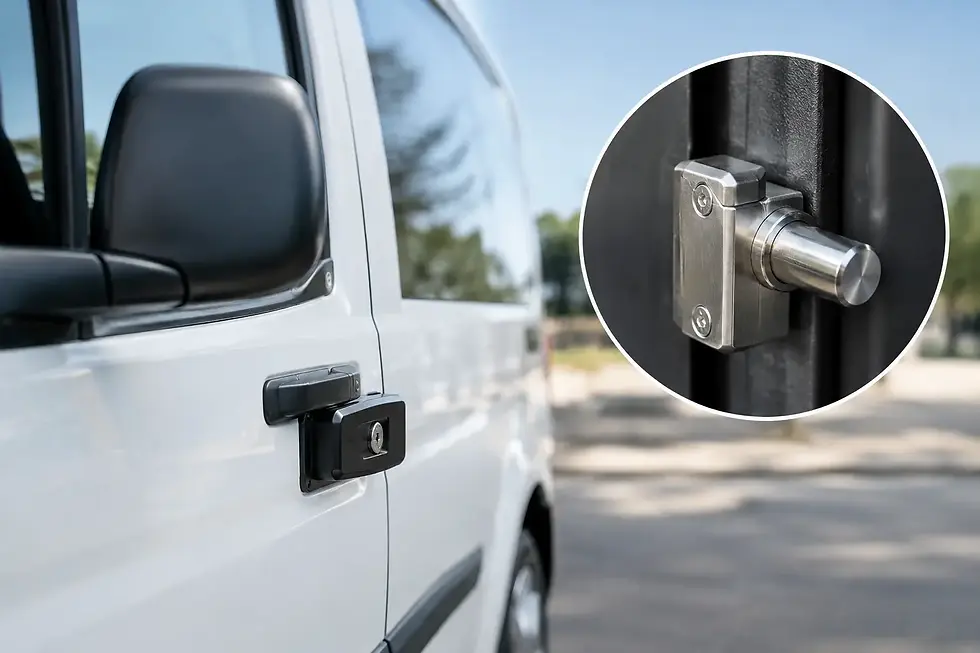
The strongest approach is an independent deadbolt system. Independent means the deadbolt does not depend on the van’s factory locking motor, standard door handle, or original cylinder remaining intact. Once engaged, the bolt provides a separate mechanical connection between the door and its mounting point.
That matters when an attacker bypasses the factory system. The original locks may release, but the added deadbolt remains in place. The rear doors still cannot be opened normally until the security system is released by its own authorized control.
A remote-controlled deadbolt can provide this protection without making daily work awkward. The driver can secure the load area quickly, then release it when access is required. The best systems use dedicated electronics and rolling-code remotes so a copied or intercepted signal is not a simple route into the van.
There is a trade-off. Any additional security device adds an extra action to the working day. That is why installation position, remote operation, and reliable release are not minor details. A lock that is difficult to use eventually gets left open. Security has to be strong enough for the threat and practical enough to be used every shift.
Choose hardware for the attack, not the brochure
Not every add-on lock provides the same protection. A light-duty hasp, exposed padlock, or basic surface lock may deter opportunist theft, but it can also advertise where force should be applied. Exposed components can become leverage points, and visible hardware may be attacked with cutting or prying tools.
When assessing how to upgrade van rear door locks, look at the physical design first. The deadbolt and mounting hardware should be built from heavy-duty materials and fixed into strong points of the vehicle structure. The system must resist sideways load, pulling force, and the twisting movement created by a pry bar.
Concealment is equally valuable. A security system with no obvious external lock cylinder or visible attack point gives thieves less information at the door. They may see that the van is protected, but they should not be able to identify a weak component from the outside.
Check whether the product is designed for your exact vehicle and rear-door configuration. A Ford Transit, Mercedes Sprinter, Ram ProMaster, and VW Crafter all have different door profiles, internal clearances, latch layouts, and mounting opportunities. Universal hardware can fit in a broad sense while still failing to use the strongest available mounting positions.
Rear doors need more than a stronger lock in some cases
A deadbolt addresses the opening action, but rear-door protection should be considered alongside the rest of the cargo area. If thieves can peel a side door away from the body or compromise another entry point, rear locks alone will not protect the tools inside.
For vans with vulnerable sliding doors, anti-peel brackets add resistance at the upper door area where leverage attacks often begin. They help hold the door structure in position and reduce the gap a crowbar can create. This is not a replacement for a deadbolt. It is protection against a different attack method.
The right setup depends on how the van is used. A plumber carrying high-value diagnostics and power tools may need independent locks on both rear and side doors. A delivery vehicle that is opened constantly through the rear may prioritize fast remote operation at the back, with side-door reinforcement for overnight parking. Fleet vans should be standardized where possible so every driver understands the locking routine.
Installation details that affect security
A well-designed lock is only as good as its installation. The mounting points must be solid, the alignment must be accurate, and the bolt must engage fully without binding. A poorly aligned deadbolt can wear quickly, become difficult to operate, or leave a gap that reduces resistance under force.
Plug-and-play installation-ready kits reduce unnecessary drilling, cutting, and electrical guesswork. That matters on a work vehicle. The fewer modifications required, the faster the installation and the lower the chance of damaging trim, wiring, or weather sealing. It also makes it easier to fit a consistent system across several vans.
Before fitting, inspect the rear doors for existing damage, sagging hinges, poor alignment, or corrosion around mounting areas. A security upgrade should not be used to mask a door that already closes badly. Correct the underlying issue first, then set the deadbolt so it engages cleanly every time.
After installation, test the system with the doors under normal closing pressure. Confirm that the bolt locks fully, releases reliably, and cannot be operated through the factory handle. Test both remotes, keep a controlled spare, and make sure every authorized driver knows the emergency procedure for accessing the load area.
Avoid common mistakes when upgrading rear door locks
The most common mistake is relying on a visual deterrent as if it were a structural defense. Stickers, flashing LEDs, and visible padlocks may make a thief choose another target, but they do not provide dependable resistance when your van is selected.
Another mistake is connecting the added lock too closely to the factory system. If the security device releases whenever central locking is compromised, it has not created a genuinely independent layer. The whole point of a dedicated deadbolt is that a factory lock bypass does not automatically open the cargo doors.
Do not ignore operational habits either. A deadbolt offers no protection if it is left disengaged during a quick stop outside a supply house. Build the locking action into the routine: park, secure the cargo area, and verify the doors are protected before walking away.
Van Security Systems designs purpose-built, remote-controlled deadbolts and anti-peel hardware around these real theft methods, with heavy-duty physical security that remains separate from the vehicle’s original locking system.
A stronger rear door changes the risk calculation
The goal is not to claim that any van is impossible to attack. Given enough time, noise, and tools, almost any barrier can be challenged. The practical goal is to remove the quick entry route that makes a work van an easy target.
An independent rear-door deadbolt turns a compromised factory lock into only part of the problem for the thief. Combined with sound parking habits and protection for other cargo doors, it gives your tools more than a standard latch standing between them and the street. Fit security before the next loss forces the decision.


Comments