

.png)


Do Anti Peel Brackets Work on Cargo Vans?

A thief does not need to pick a lock if they can force a gap at the side or rear door and peel the skin back. That is why van owners ask, do anti peel brackets work? A properly designed, correctly fitted anti-peel bracket can make this common forced-entry method substantially harder, slowing the attack and denying the leverage a crowbar needs.
For a trade van carrying tools, test equipment, parts, or inventory, that delay matters. Most opportunistic theft depends on speed, noise control, and a quick exit. The aim is not to make a van indestructible. The aim is to make forced entry difficult enough that the attacker cannot get in quickly or quietly.
Do Anti Peel Brackets Work Against Van Break-Ins?
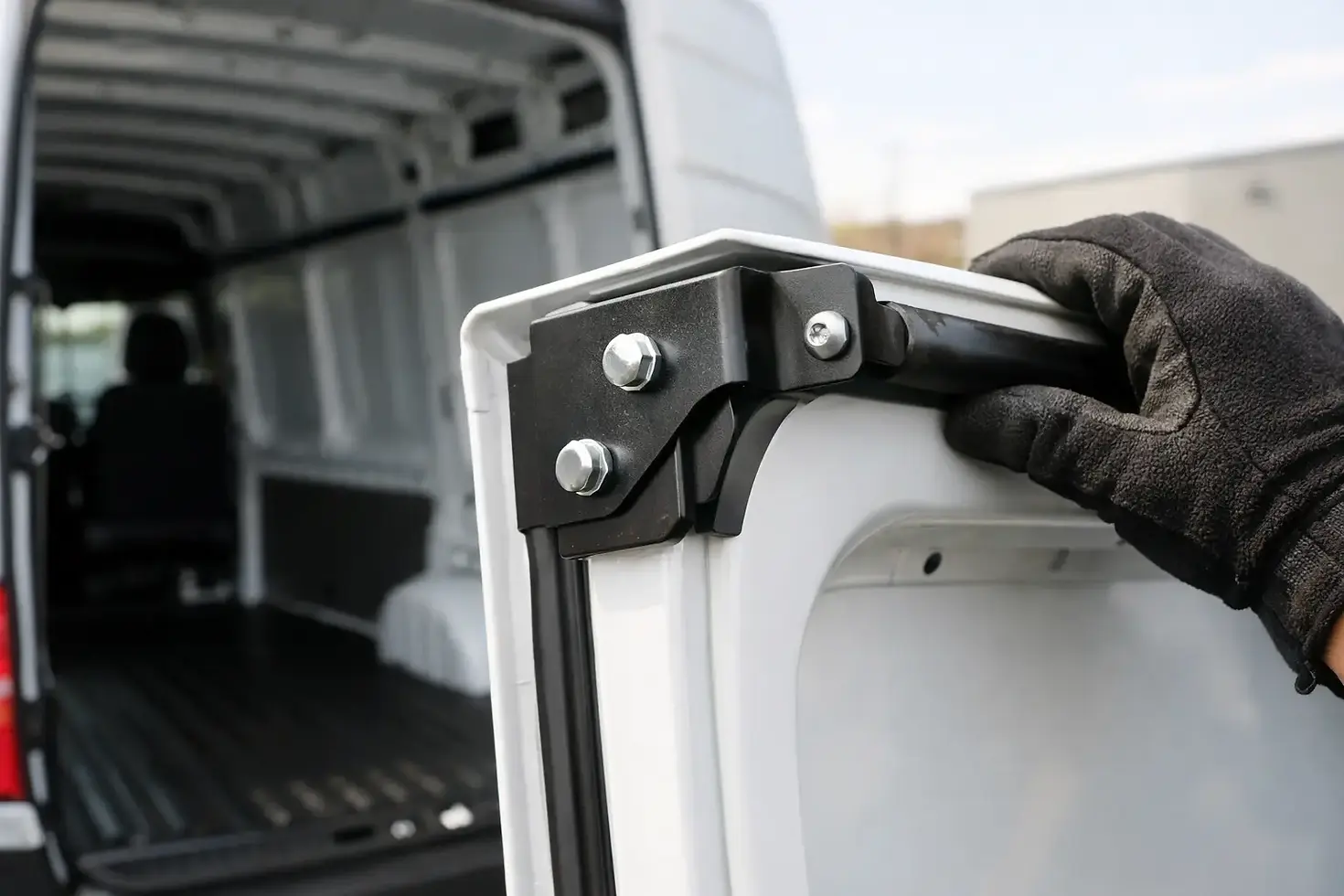
Yes, anti-peel brackets work when they are built for the vehicle door, fitted into strong mounting points, and used as part of a layered security setup. They reinforce the vulnerable area where a crowbar is commonly driven between a door edge and the body of the van.
Without reinforcement, the upper corner or leading edge of a sliding door can flex under leverage. Once a gap opens, the attacker can work along the seam, bend the outer skin, damage the latch area, or reach inside to release a lock. Modern van doors are designed to be light enough for daily operation, not to withstand repeated prying with a steel bar.
An anti-peel bracket changes that equation. It creates a stronger mechanical connection between the door and the vehicle body. Instead of the crowbar levering against thin sheet metal and a relatively flexible door edge, it meets purpose-built steel hardware designed to resist spreading and twisting.
That does not mean every bracket performs equally. A universal plate with weak fixings is not the same as a vehicle-specific anti-peel system positioned at the actual point of attack. The bracket must control movement where it counts.
How Door Peeling Attacks Happen
Door peeling is a brute-force attack. The thief usually targets a seam around the sliding side door or rear cargo doors, often near the top corner. A pry bar creates the initial opening. Once there is enough space, leverage does the rest.
The attacker may not need to defeat the factory lock directly. They may bend the door until they can reach the internal release, pull at cables or linkages, or simply create an opening large enough to remove tools. This is why relying only on the original central locking system leaves a weakness. The lock may still be engaged, but the door structure around it has been compromised.
Anti-peel hardware is intended to stop the first stage: opening a workable gap. If the door cannot be pulled away from the body, the crowbar attack becomes slower, louder, and more likely to fail.
A visible damaged door also creates cost even when nothing is stolen. A bent sliding door can stop sealing properly, jam on its track, damage the frame, and keep a working vehicle off the road. Preventing the attack is better than paying for bodywork after the fact.
What a Good Anti-Peel Bracket Actually Does
A serious anti-peel bracket is not just a metal tab added to a door. It should be formed from heavy-gauge steel and shaped to prevent the door from being forced outward at its vulnerable edge. The mounting hardware and the structure it mounts to are just as important as the bracket itself.
When the door is closed, the bracket should create an interlocking barrier between the door and body. Under pry force, it should transfer load into stronger areas of the vehicle rather than allowing the thin door skin to bend. It needs to resist both outward pull and twisting force because crowbar attacks are rarely straight-line loads.
The best systems are vehicle-specific. A Ford Transit, Mercedes Sprinter, Ram ProMaster, and VW Crafter have different door profiles, gaps, reinforcement points, and operating clearances. A bracket designed around the exact door geometry is more likely to sit correctly, close cleanly, and protect the intended attack point.
It must also allow normal use of the vehicle. A bracket that rattles, catches, interferes with the sliding-door action, or needs constant adjustment will eventually become a problem. Security hardware should be fitted once and left to do its job.
Where Anti-Peel Brackets Have Limits
Anti-peel brackets are highly effective against a specific method of attack. They are not a complete van security system by themselves.
If a thief attacks a different area, such as a rear-door seam, a window, a roof vent, or the ignition system, a side-door anti-peel bracket will not protect that point. Likewise, a bracket does not replace a deadbolt. It reinforces the door against peeling, while a deadbolt provides an independent locking point that holds the door shut even if the factory lock, wiring, or handle mechanism is compromised.
There is also a difference between delaying a thief and defeating a determined attack with unlimited time, tools, and privacy. No practical vehicle security product can promise the latter. What good hardware does is force more noise, more effort, more time, and more risk onto the attacker.
That is why layers matter. Anti-peel brackets, independent deadbolts, protected rear doors, a visible alarm response, secure parking, and sensible tool storage all reduce exposure. A thief looking at two similar vans will normally prefer the one that appears easier to open.
How to Tell Whether a Bracket Is Worth Fitting
Start with the vehicle and the door being protected. Confirm that the bracket is designed for your exact make, model, wheelbase, and door configuration. A side-loading door may need a different solution from rear barn doors, and a high-roof model can have different panel geometry from a standard-roof version.
Then look at the material, thickness, finish, and fixing method. Heavy steel construction is useful only if the bracket is anchored properly. Weak bolts, poor fastener placement, or installation into thin unsupported metal can create a new failure point. Good anti-peel hardware uses strong, tamper-resistant fixings and mounts where the body structure can take the load.
Check how the bracket works with your other security equipment. A bracket should not obstruct an aftermarket deadbolt, factory latch operation, door seals, or access to service areas. It should also sit discreetly when the doors are shut. External security that advertises exactly where to attack can create its own problem.
Installation quality is critical. Measure carefully, use the supplied hardware, and follow the intended mounting position. Do not assume that moving the bracket a few inches will give the same protection. Anti-peel devices are placed to control a known leverage point, and small changes can reduce their effectiveness.
For fleet vehicles, consistency is valuable. Fitting the same proven door protection across similar vans makes inspections simpler and gives drivers confidence that every vehicle has a known level of defense. Keep a record of the hardware fitted to each vehicle, particularly if vans are replaced, reassigned, or repaired after an incident.
Anti-Peel Brackets and Deadbolts Work Better Together
An anti-peel bracket protects the door edge from forced spreading. A deadbolt secures the door with an independent mechanical lock. These are different jobs, and combining them gives better protection than choosing one and assuming it covers every threat.
For example, a remote-controlled deadbolt can remain locked even if factory central locking is bypassed or the original latch mechanism is damaged. The anti-peel bracket then helps prevent a crowbar from opening enough of the door to access that mechanism or pull the structure apart around it.
Van Security Systems designs this type of layered defense around the attacks working vans actually face: forced door gaps, crowbar leverage, compromised factory locking, and rapid tool theft. The practical result is a door that is harder to pry and harder to unlock.
The Practical Answer for Working Vans
Anti-peel brackets are worth fitting if your van has a vulnerable sliding or rear door and carries equipment you cannot afford to lose. They are especially useful for tradespeople who park on driveways, job sites, industrial estates, hotel lots, or streets where a thief may have a few minutes alone with the vehicle.
Choose vehicle-specific hardware, fit it correctly, and pair it with an independent deadbolt where possible. Then close up every day knowing a crowbar attack will have a much harder job than it did before.


Comments