


Four Crowbar Attack Weak Points on Work Vans

A crowbar attack is not usually about defeating a key cylinder. It is about forcing a gap, flexing a panel, and turning a small weakness in the bodywork into an opening large enough to reach the load area. The four crowbar attack weak points below are the areas worth checking first if your van carries tools, stock, testing equipment, or anything that keeps your business moving.
Factory central locking was designed for everyday access and convenience. It is not a complete answer to a determined forced-entry attack. Once a thief gains leverage at a door edge or flexes a weak section of skin, the original lock can become irrelevant. Proper van security needs to hold the door closed independently of the factory locking system.
Why crowbar attacks work on vans
Van doors have to be light enough to open, close, and operate reliably every day. That means they contain folded metal edges, seams, weather seals, moving linkages, and sections that are less rigid than the main body shell. An attacker looks for areas where force can spread a gap before the lock or latch has a chance to resist it.
The risk varies by vehicle model, door configuration, and how the van is parked. A high-roof cargo van with rear barn doors does not present the same risks as a compact service van with a single sliding side door. But the principle is the same: if the door can be pulled away from its frame, the factory latch is no longer the only part under pressure.
Four crowbar attack weak points to assess
1. The sliding side door leading edge
The leading edge of a sliding side door is a common concern because it meets a large opening in the vehicle body and relies on a latch area rather than a continuous welded seam. If that edge flexes outward, the door can separate from the frame enough to expose the cargo area or damage the locking mechanism.
This is also where anti-peel protection matters. A properly engineered anti-peel bracket strengthens the vulnerable interface between the side door and body, limiting the movement that forced entry relies on. It should be designed for the specific door geometry, not treated as a generic piece of metal attached wherever there is space.
Look for a system that reinforces the attack area without leaving an obvious external point to target. Visible add-on hardware can advertise both the presence of valuable cargo and the location of the security device. Concealed protection keeps the exterior of the van cleaner and gives an attacker less information.
2. The rear door outer edges and center split
Rear doors are often the largest access point on a work van. On vehicles with two rear doors, the center split and outer edge areas deserve close attention. These doors can be exposed to leverage forces that pull the panels away from the frame or create movement around the original latching points.
The problem is not only whether the factory lock can be picked or bypassed. A rear door may remain technically locked while the surrounding metal flexes enough to create access. That is why a secondary deadbolt is different from a replacement handle lock. A deadbolt adds a separate physical locking point between the door and the vehicle body.
For a working van, the most useful setup is one that locks solidly without depending on the OEM latch staying intact. If the factory central locking is compromised, damaged, or bypassed, the independent deadbolt should still keep the door secured to the body.
3. Door-skin areas around handles and latch zones
Door skins are designed as outer panels, not as armor plate. Areas around handles, latch zones, and recessed hardware can be more susceptible to deformation than reinforced structural sections. Damage in these locations may provide access to internal linkages or allow the panel to be distorted enough to affect how the door closes and locks.
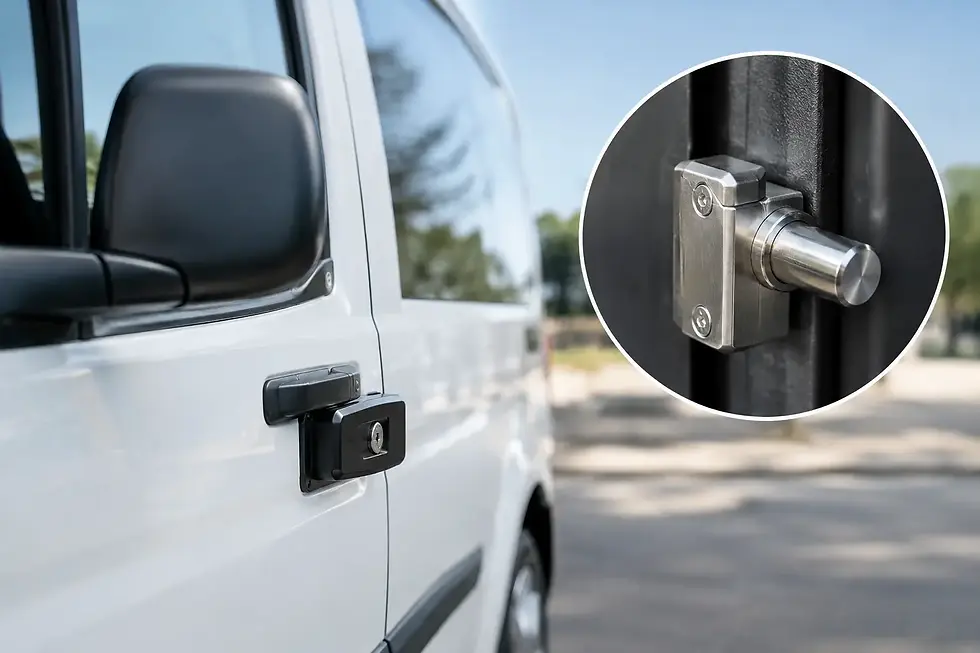
There is a trade-off here. External lock housings can add a visible deterrent, but they also create a clear target and may introduce another area for attack. Concealed deadbolt systems avoid putting a prominent security device on the outside of the door. The protection is focused on holding the door shut, rather than inviting attention to the lock itself.
When evaluating a deadbolt, ask where its load is carried. Heavy-duty hardware, substantial mounting points, and a secure engagement point matter more than decorative covers or a large-looking lock body. The goal is controlled, independent restraint when the door is put under force.
4. The lower door corners and frame interface
Lower corners can be overlooked because they are less obvious than handles or locks. Yet they are where a door panel meets the frame, weather seal, and lower structural sections. Repeated use, road vibration, corrosion, prior accident repairs, or a poorly aligned door can all reduce how tightly these areas sit against the body.
A van that has been used hard may have more movement at the doors than its owner realizes. Check for uneven panel gaps, damaged seals, doors that need lifting to close, and signs that a latch does not engage cleanly. These are maintenance issues, but they are security issues as well. A door that does not sit squarely gives forced entry pressure more room to work.
A secondary locking system should not be used to hide a bad door alignment or damaged hinges. Correct the underlying fit first. Then add security hardware that is built to secure a properly closing door against attack.
What effective crowbar resistance looks like
Crowbar resistance is not one feature. It comes from layers that address the way forced entry actually happens. The door should be held at more than one point, vulnerable side-door areas should be reinforced, and the security system should remain functional when the factory locking system is not.
For many tradespeople, remote-controlled deadbolts are practical because they add independent locking without adding a slow, complicated routine at every stop. The remote system should use secure rolling-code control, and the deadbolt should engage with a clear mechanical action rather than relying solely on the van's existing electronics.
Installation matters just as much as the product. A system designed around a vehicle's mounting points and door layout is less likely to interfere with normal operation. Plug-and-play wiring can reduce fitting time and avoid unnecessary alterations to the vehicle, but the physical hardware still needs to be fitted exactly as intended. Loose fasteners, poor alignment, or improvised brackets reduce the value of any security upgrade.
A practical inspection before you buy security hardware
Walk around your van after it is parked and locked. Check the side-door edge, rear-door gaps, lower corners, handles, and hinges. You are not looking for a way into the vehicle. You are looking for signs of movement, damaged metal, missing fasteners, weak alignment, or previous forced-entry damage that could leave the door less secure than it was when new.
Also consider where the van spends its nights and working hours. A fleet vehicle left on a dark jobsite faces a different threat profile from a van parked inside a locked yard. That does not mean one setup is safe without added protection. It means the level and placement of security should reflect the value of the equipment inside, the likely exposure, and the cost of downtime if the van is put out of service.
Van Security Systems builds independent remote-controlled deadbolt and anti-peel protection for this exact problem: keeping cargo doors secured when factory locks alone are not enough. The strongest choice is normally the one that protects the actual weak areas of your specific van without creating new visible attack points.
A stolen tool can be replaced. Lost work, delayed jobs, insurance excesses, and a damaged van are harder to absorb. Inspect the weak points before they become the reason your doors fail when they are needed most.


Comments