


Five Van Door Security Upgrades That Stop Break-Ins

A thief does not need to defeat every lock on a work van. They need one weak door edge, one exposed latch, or enough leverage to peel back a side door. That is why five van door security upgrades should be judged by the attack methods they stop, not by how impressive they look on the outside. Your factory central locking is useful for convenience. It is not a complete answer when the van is carrying the equipment that earns your living.
Five van door security upgrades that target real attacks
The best approach is layered physical security. Each layer should either prevent forced entry, slow it down enough to make the attack unattractive, or alert you while the van is still being attacked. Start with the doors most exposed to theft, then build protection around the way those doors actually fail.
1. Fit an independent deadbolt to the sliding side door
The sliding side door is a frequent target because it offers a large opening and a long outer skin that can be pulled away from the body. A thief using a crowbar is not trying to operate the factory lock correctly. They are trying to separate the door from the frame until the latch gives way.
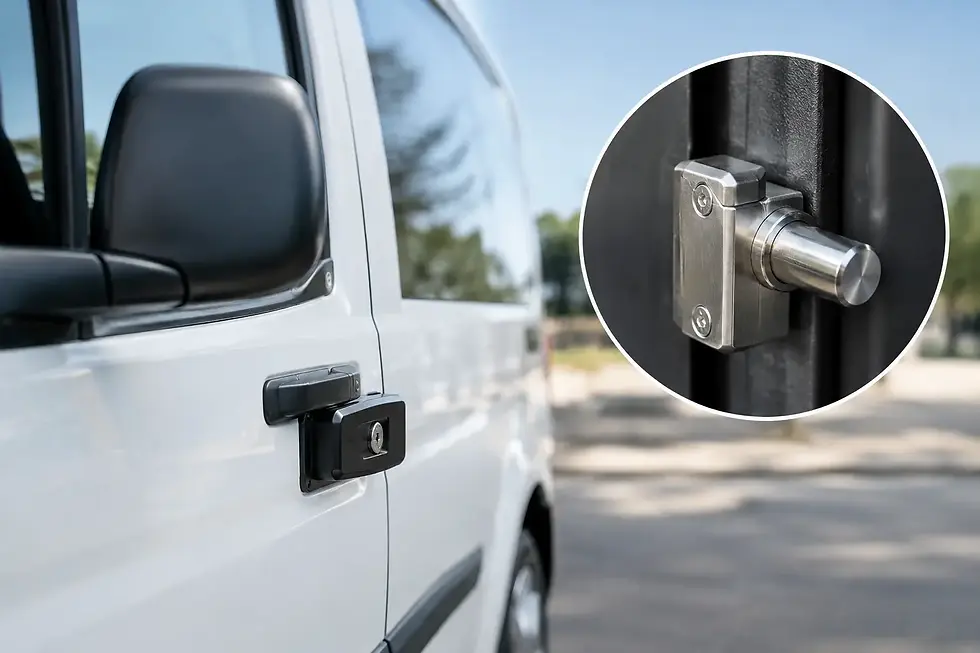
An independent deadbolt adds a physical locking point that does not rely on the original central locking system. When properly fitted, the bolt secures the door to the vehicle structure rather than trusting the OEM latch alone. If the factory lock is picked, bypassed, damaged, or released through an electronic attack, the separate deadbolt remains locked.
A remote-controlled deadbolt is often the practical choice for a working van. It allows the driver to lock and unlock a heavy-duty security point without walking around the vehicle or handling an external padlock. Look for a system with rolling-code remote control, vehicle-specific mounting hardware, and an installation layout that keeps the mechanism out of sight. Concealed security matters. Visible external hardware can advertise where an attacker should concentrate their effort.
There is a trade-off. A deadbolt is only as useful as the area it locks into. Avoid universal hardware that is simply fastened to thin door skin. The mounting, receiver, and fixing points need to be engineered for the van model and positioned to resist leverage.
2. Add dedicated rear door deadbolt protection
Rear doors are often treated as secondary because they may be parked close to a wall, another vehicle, or a loading area. That assumption fails as soon as the van is left on a driveway, at a hotel, or on a job site with access behind it. Rear doors also contain valuable weak points around their latches and door seams.
A dedicated rear-door deadbolt gives the back of the van its own independent physical defense. This is particularly useful on high-roof vans, where a forced rear opening gives direct access to shelving, cases, and bulkier equipment. On twin rear doors, the security arrangement must account for the active door and the way both doors overlap when closed.
Do not assume one added lock protects every opening. A side-door system may offer no protection at all when a thief attacks the rear. Treat each entry point as a separate risk. If tools are stored toward the back, or if the vehicle spends time rear-facing toward public access, rear-door security should be high on the list.
Remote operation also has an operational benefit here. Drivers are more likely to use security that does not slow down a busy day. A protection system left unlocked for convenience is not protection.
3. Install anti-peel brackets on vulnerable side doors
Door peeling is exactly what it sounds like. An attacker forces a tool between the top or rear edge of a sliding door and the body, then pulls the door skin outward until there is enough access to reach the release mechanism. The factory latch can remain technically locked while the thief creates an opening around it.
Anti-peel brackets are designed to close off that leverage opportunity. They reinforce the relationship between the sliding door and the body, making it harder to get a crowbar into the vulnerable gap and far harder to pull the door away from its normal closed position. This upgrade is especially relevant for vans that use a single sliding side door and carry high-value equipment close to that opening.
The fitting position matters. A bracket installed too low or too far from the known attack area may not control the part of the door a thief will try to flex. It also needs to work with the natural travel of the sliding door, without fouling the mechanism or creating an annoying daily-use problem.
Anti-peel protection is not a replacement for a deadbolt. It is the reinforcement that prevents an attacker from working around the lock. Used together, the bracket limits door movement while the deadbolt holds the door firmly shut.
4. Reinforce the latch and door-frame area
Most forced-entry damage happens at the meeting point between the door, latch, and body structure. If that area distorts under leverage, the lock may release even when the lock cylinder itself has not been defeated. Reinforcing the latch zone can reduce flex and spread the force of an attack across a stronger section of the door structure.
This can involve model-specific internal reinforcement plates, strengthened striker areas, or a security system that uses a substantial receiver fixed into a suitable structural point. The right solution depends on the vehicle. A Ford Transit, Mercedes Sprinter, VW Crafter, and Peugeot Boxer do not share the same panel geometry, door travel, or factory latch layout.
Be cautious with generic drilled-on hardware. Poorly placed fasteners can weaken panels, interfere with wiring, trap moisture, or prevent doors from closing cleanly. The goal is not to add metal for the sake of it. The goal is to create a strong load path when a crowbar tries to force the latch side of the door outward.
This is where vehicle-specific security hardware earns its place. Van Security Systems designs its hardware around independent physical locking and practical installation, rather than asking a thin factory panel to carry the whole load.
5. Add a door alarm and immediate alert layer
A physical lock is what stops the door opening. An alarm adds pressure on the attacker while they are trying. Door contacts, vibration sensing, tilt sensing, and audible alarms can make an attempted peel or crowbar attack far less comfortable, especially on a residential driveway or outside a job site.
Choose the alarm function based on where the van is parked. A loud local siren can be effective where people are nearby. A phone alert may be more useful when the van is parked away from you, although it depends on signal coverage and how quickly you can respond. Neither should be treated as a substitute for physical door protection. An alert that arrives after a weak latch has released does not keep your tools inside.
Alarm systems also need careful setup. Over-sensitive vibration settings that trigger every time a truck passes will train you and your neighbors to ignore them. The best setup detects a genuine attempt to strike, pry, or open the doors without becoming a false-alarm nuisance.
Build security around how your van is used
Not every van needs the same configuration. A self-employed electrician parking at home may prioritize a sliding-door deadbolt, anti-peel bracket, and alarm. A fleet carrying expensive diagnostic equipment may need side and rear independent deadbolts across every vehicle, with standardized remotes and fitting procedures. A delivery van with low-value stock may accept a lighter setup, while a mobile engineer carrying specialized equipment cannot afford that risk.
Consider where the vehicle sits after hours, which door gives the quickest access to your gear, and whether the contents can be seen or reached immediately after opening. Also consider downtime. Replacing stolen tools is expensive, but losing days of work while waiting for claims, repairs, and replacement equipment can cost more than the tools themselves.
A serious van security setup should make forced entry noisy, slow, and physically difficult. Fit protection before the first break-in forces the decision. The right door security upgrades let you finish the day knowing your van is still working for you, not waiting to become somebody else's easy target.


Comments