


7 Van Security Mistakes Tradespeople Make

A side door peeled back in a dark parking lot can put a tradesperson out of work before the first call of the morning. The van security mistakes tradespeople make are rarely about not caring. More often, they come from assuming the factory locks, an alarm, or a tool insurance policy will stop a determined attack.
Factory vehicle security is designed for everyday use. It is not necessarily designed to resist a crowbar forced into a door gap, a peeled side door, or a thief who knows exactly where standard locking points sit. If your van carries the equipment that earns your living, security needs to be built around the way vans are actually attacked.
1. Trusting Factory Locks as the Main Defense
Central locking is convenient. It is not a complete security strategy.
On many work vans, the factory locking system uses standard latches and electronic control modules that thieves understand well. If the door skin can be flexed, the latch area can be reached, or the original lock is defeated, the rest of the van may be accessible in seconds. A factory alarm may sound after the attack has started, but that does not physically hold the door shut.
The weak point is often not the key cylinder. It is the door structure and the limited number of locking points resisting force. A thief does not need to pick a lock if they can bend the door around it.
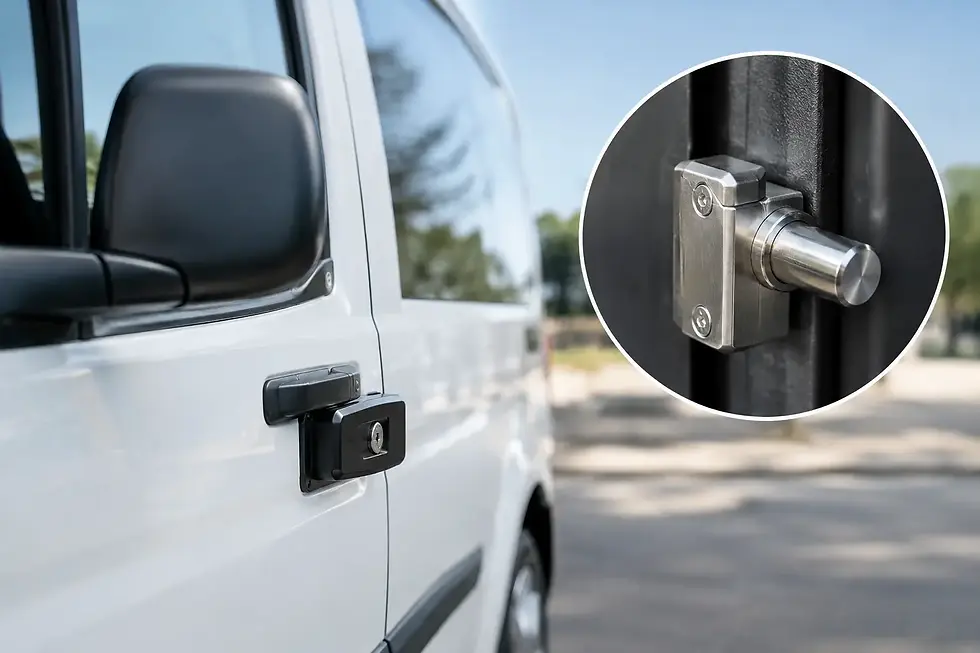
A separate, high-strength deadbolt changes that calculation. It should operate independently from the factory system, physically securing the door even when the original central locking has been compromised. Remote-controlled deadbolts are particularly useful for working vans because they add a serious locking point without making the daily routine slower.
2. Ignoring Side-Door Peel Attacks
Sliding side doors are a common target because they offer a large panel and a practical levering point. The attack is simple: force a gap, peel the door edge away from the body, then reach inside or release the mechanism.
This is not a theoretical risk reserved for isolated job sites. It happens in residential streets, hotel parking lots, contractor yards, and any location where a van is left unattended long enough for a thief to work.
An alarm alone does not prevent door peeling. Neither does a visible sticker claiming the van is protected. Physical reinforcement is what matters. An anti-peel bracket reinforces the vulnerable area and makes it far harder to create the opening needed for a crowbar attack. Used with an independent deadbolt, it protects against both the initial forced gap and the attempt to defeat the standard door latch.
Do not assume every door needs the same hardware. A van with a sliding side door and twin rear doors has different weak points from a van with only rear access. Protect the entry points that give thieves the fastest route to your tools.
3. Adding Security That Creates a New Attack Point
Some aftermarket locks are highly visible from outside the van. That may make a thief hesitate, but it can also advertise exactly where to attack. External padlocks, exposed hasps, and poorly positioned hardware can be cut, pried, or struck. They can also collect dirt, corrode, snag on clothing, and become a daily inconvenience.
Visible deterrents have a place, especially where a fleet needs obvious security controls. But the best mechanical protection does not have to give an attacker a clear target. Concealed deadbolt systems keep the critical locking hardware inside the vehicle structure, where it is harder to access with cutting tools or leverage.
The goal is not to make the van look like a fortress. It is to make forced entry slow, noisy, and difficult enough that the thief moves on. Security that is discreet from the outside but substantial where it counts is usually the better long-term setup.
4. Treating an Alarm as Physical Protection
Alarms, tracking systems, and cameras all have value. None of them replace a physical lock.
An alarm can alert people nearby, but many van thefts happen where nobody responds. A tracker may help recover a stolen vehicle, but it does not put stolen diagnostic equipment, cordless tools, or customer parts back in your hands for tomorrow's job. Cameras can provide evidence, yet evidence does not prevent downtime.
These systems work best as layers. Mechanical security delays or stops entry. An alarm adds attention and pressure. A tracker supports recovery if the vehicle itself is taken. Insurance helps with the financial aftermath, although claims, replacement lead times, excess payments, and lost work can still hurt the business.
Start with the layer that physically keeps the doors closed. Then add electronic measures based on where the van is parked, what it carries, and how quickly you need to know about an attempted break-in.
5. Installing Hardware That Is Not Built for Your Van
Universal security products can be tempting because they appear cheaper and readily available. The problem is fitment. If a lock or bracket does not match the vehicle's door geometry, mounting points, and internal clearances, the installation can become the weak link.
Poorly fitted hardware may interfere with door operation, sit in a position that can be attacked, or rely on thin areas of sheet metal that were never intended to carry high loads. It can also turn a straightforward installation into drilling, spacing, improvising, and hoping the door still closes properly.
Choose security equipment designed around the specific vehicle platform and door type. Ford Transit, Mercedes Sprinter, Ram ProMaster, Volkswagen Crafter, and similar vans all have different door construction and access constraints. Installation-ready hardware should use the correct fixings and clear instructions so the system performs as designed.
Plug-and-play installation does not mean weak installation. It means the engineering has been done before the kit reaches the van. That reduces fitting time while avoiding unnecessary modifications to the vehicle.
6. Forgetting That Daily Use Determines Whether Security Gets Used
A lock that is awkward to operate eventually gets skipped. This is one of the most expensive van security mistakes because it creates a false sense of protection. You may have paid for hardware that stays unused during quick supply runs, lunch breaks, or the last tired stop of the day.
The right system has to suit the working routine. Remote operation makes a real difference when you are carrying materials, moving between calls, or securing multiple doors at the end of a shift. A dependable remote system should use secure rolling-code control rather than a basic fixed signal that can be copied.
Also consider what happens in bad weather, on uneven ground, or when the van is fully loaded. Can you secure the vehicle without crawling into the cargo area? Can another authorized driver operate the system? Is there a clear procedure if a remote is lost or damaged? Practical questions like these determine whether protection is consistently used.
7. Leaving Tools Visible and Parking Without a Plan
Strong locks should not be an excuse to leave expensive equipment on display. A stack of cases visible through a window tells a thief exactly why your van is worth attacking. Remove high-value items when practical, cover equipment, and keep the cargo area organized so nothing can be seen from outside.
Parking matters too. The safest location depends on the job, but the basic rule is simple: reduce access and increase visibility. Back doors close to a wall or gate can limit leverage space. Parking under lighting or within view of occupied buildings adds pressure. At home, a driveway may be better than curbside parking, but only if it does not leave the side door exposed to a hidden approach.
Be careful with predictable routines. If the van is loaded the same way, parked in the same place, and left unattended at the same time each day, thieves can learn the pattern. Varying where you park and removing the most valuable items overnight may be inconvenient, but it reduces the reward for an attempted break-in.
Build Security Around the Attack, Not the Assumption
The best van security setup depends on the vehicle, the equipment inside, and where it is parked. A plumber carrying hand tools has different exposure from an electrical contractor with test equipment or a mobile technician carrying high-value inventory. But the principle does not change: factory locks are one layer, not the final layer.
Van Security Systems builds vehicle-specific remote deadbolts and anti-peel protection for the forced-entry methods that put working vans at risk. The right hardware should add independent physical strength without creating a visible weak point or making the van harder to use.
A thief is looking for the quickest entry and the easiest reward. Make the door resist the attack, keep the load out of sight, and give yourself the best chance of arriving at work with your tools still where they belong.


Comments