


Tool Theft Prevention for Vans That Carry Your Living

A stolen impact driver is expensive. A van emptied overnight can cost far more than the replacement value of the tools inside it. Tool theft means canceled jobs, missed deadlines, insurance excesses, lost customer confidence, and time spent dealing with reports and claims instead of earning.
For tradespeople and fleet operators, the van is not just transport. It is a mobile workshop, stockroom, and income source. That is why protecting it requires more than trusting the factory central locking system and hoping a thief moves on.
Why Tool Theft From Vans Keeps Happening
Commercial vans are targeted because thieves know what they are likely to find. A sign-written electrician's van, a contractor's pickup, or a plain panel van parked near a job site can all hold tools worth thousands of dollars. The thief does not need to take the vehicle. They only need enough time and access to clear out the load area.
Factory locks are designed for general vehicle access. They are not always designed to resist a determined forced-entry attack on a parked work van. Once the original lock, latch, or central locking system has been compromised, the load area may be exposed quickly.
Thieves also work to a routine. They look for vans left on driveways, hotel parking lots, job sites, transit stations, and poorly lit streets. They watch for vehicles that are loaded at the end of the day and still loaded the next morning. A short stop for supplies can be enough if the van has weak points that can be attacked fast.
The uncomfortable fact is that an alarm may alert people after entry has happened. A tracking system may help recover the vehicle, but it does not stop tools from being removed. Physical resistance at the door is what makes forced entry slower, louder, and less worthwhile.
The Forced-Entry Methods Behind Tool Theft
A thief does not need a sophisticated method when a door can be forced with basic leverage. The most common attacks are aimed at the areas where standard van doors and factory locks have limited protection.
Crowbar attacks
A crowbar can be driven between a door and its frame to attack the latch area. The aim is to bend the door skin, distort the frame, or force the factory latch open. Damage can be severe even when the thief does not gain entry, leaving the vehicle off the road for repairs.
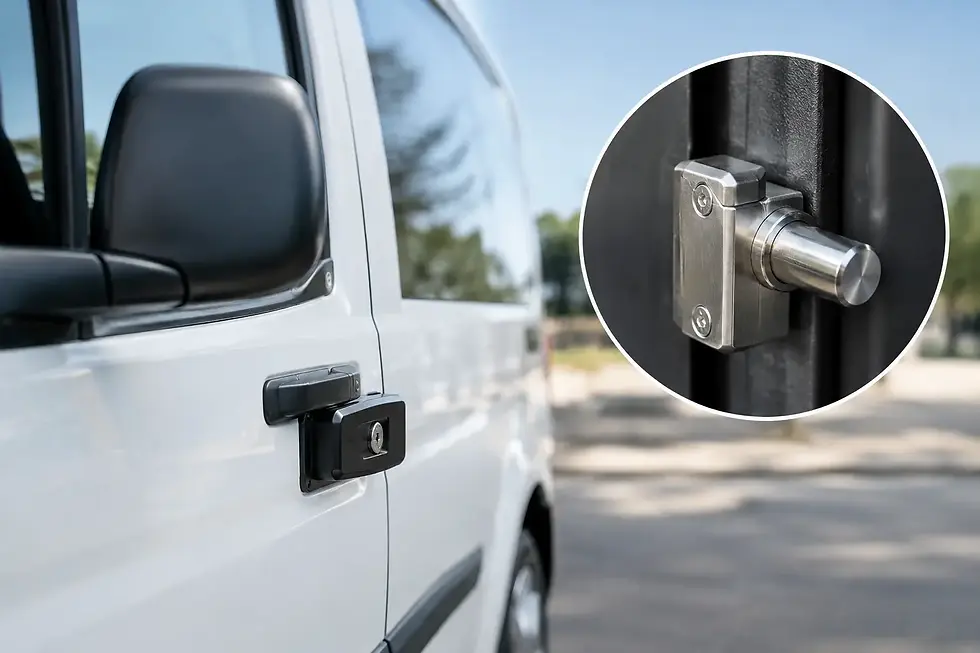
An additional deadbolt changes the attack. Instead of relying on one factory latch, the door is held by an independent physical locking point. A properly engineered deadbolt should remain engaged even if the factory locking system is defeated.
Door peeling
Rear and side loading doors are often attacked by peeling back the outer edge of the door. Once a gap is created, a thief can gain access to the load area or reach internal release hardware. This method is particularly destructive because the door itself can be bent beyond economical repair.
Anti-peel brackets reinforce the vulnerable edge and limit the space available for leverage. They are not decorative hardware. Their purpose is to stop a tool from getting the purchase needed to start opening the door skin.
Lock drilling and picking
Some attacks focus directly on the factory lock cylinder. If the thief can defeat it, they may gain access without creating obvious external damage. That can make a van look secure while the contents have already gone.
Independent locking is valuable here because it separates the cargo-area protection from the factory lock. Defeating one system should not automatically release the other.
Attacks on the factory central locking system
A van's electronic locking system adds convenience, but convenience is not the same as independent security. If an attacker exploits a weakness in the original locking arrangement, every factory-controlled door may be affected.
A separate remote-controlled deadbolt system adds another layer. The deadbolts operate independently and remain locked until they receive the correct command. That separation matters when the goal is to protect the cargo area, not simply lock the vehicle in the usual way.
What Strong Van Security Should Do
Good van security is not judged by how impressive it looks from the outside. In fact, visible external locks can advertise where to attack. The better approach is concealed, purpose-built hardware that reinforces the vehicle without creating an obvious target.
For tool theft protection, look for a system that delivers four things: independent locking, resistance to leverage attacks, vehicle-specific fitment, and practical daily operation.
Independent locking means the security hardware does not depend on the van's original central locking system. If the factory lock is drilled, picked, forced, or electronically compromised, the secondary deadbolt should still hold the door shut.
Resistance to leverage attacks means more than adding a padlock. The mounting points, bolt engagement, brackets, and door-edge protection need to be engineered to take force where thieves apply it. A heavy-duty deadbolt backed by an anti-peel bracket addresses two different attack points: the latch area and the door edge.
Vehicle-specific fitment matters because every van door is built differently. A security system that fits a Ford Transit may not mount correctly on a Mercedes Sprinter, Ram ProMaster, Volkswagen Crafter, or Peugeot Boxer. Poorly fitted universal hardware can interfere with door movement, leave exposed fixing points, or provide less protection than expected.
Daily operation matters too. A security system that is difficult to use will eventually be skipped when the driver is in a hurry. Remote-controlled deadbolts can give the driver a clear lock-and-unlock routine without repeatedly handling exterior padlocks or separate keys.
Choosing Protection That Fits How You Work
There is no single security setup that suits every van. A self-employed technician carrying high-value diagnostic equipment has different risks from a fleet vehicle making multiple deliveries each day. Start with what is inside the van, where it is parked, and how long it is left unattended.
If your van carries expensive power tools overnight, physical deadbolts on rear and side doors should be the first consideration. If the side loading door is the main weak point, an anti-peel solution should be part of the setup. If the van is used for frequent stops, remote operation can make it easier to secure consistently between jobs.
Security also has trade-offs. Extra hardware adds cost, and installation must be done correctly. Some drivers may prefer manual locks because they are simple, while others need remote locking to keep a busy route moving. The right choice depends on the vehicle, the equipment carried, and the threat level where it operates.
What should not be compromised is the quality of the hardware. Thin metal, exposed fittings, generic brackets, and locks dependent on the original vehicle system can create a false sense of security. Tool thieves look for the fastest route in. Security should be built around making that route difficult.
A Practical Tool Theft Prevention Routine
Hardware is the foundation, but daily habits close gaps that thieves exploit. Use this short routine before leaving the van unattended:
Lock both the factory system and any independent security system every time, including short stops.
Keep high-value tools out of sight and avoid leaving tool cases visible through windows.
Park side and rear doors close to a wall, fence, or another vehicle where possible.
Remove the most valuable portable items when the van will be left overnight in a high-risk area.
Check door edges, lock areas, and panels regularly for fresh marks, bent metal, or attempted-entry damage.
Parking position is often overlooked. Rear doors left facing an open street give thieves room to work. A side door exposed to a dark sidewalk can be an easy target. Positioning will not replace deadbolts, but it can reduce opportunity and increase the chance that an attack is seen.
Also consider what happens after an attempted break-in. A forced factory lock may still appear closed while no longer providing dependable protection. If you find signs of tampering, inspect the door, latch, and secondary locking hardware before trusting the vehicle with your tools again.
Build Security Around the Attack, Not the Convenience
The strongest setup is one that assumes a thief will try the obvious points first: factory locks, latch areas, and flexible door edges. Van Security Systems approaches this problem with independent remote-controlled deadbolts and anti-peel hardware designed for the forced-entry methods trade vans face.
The goal is not to make a van look fortified. The goal is to keep the doors shut when someone tries to force them open. Concealed hardware, secure mounting, and protection that remains active when factory locking is compromised give a working van a far stronger defensive position.
Your tools pay for the van, the insurance, and the next job. Give them protection built for the moment someone tries to take them.


Comments