


Van Door Reinforcement Guide for Break-In Defense

A van door can look fully locked and still be vulnerable. A thief does not always need to pick the factory lock or defeat the central locking system. In many tool thefts, the attack happens at the door edge, the latch area, or the upper section of a sliding door. This van door reinforcement guide focuses on the hardware that helps keep the door physically closed when force is applied.
For a working van, reinforcement is not about adding random metal plates. It is about addressing the way your particular doors fail under attack. The right setup can reduce the chance of lost tools, missed jobs, insurance disruption, and the costly downtime that follows a break-in.
Start With the Attack Method, Not the Accessory
Most forced-entry damage to commercial vans falls into two broad categories: crowbar attacks and door peeling. They require different protection.
A crowbar attack targets a gap around the door seam, latch, or rear-door edge. Once a bar is pushed into that gap, leverage can bend thin factory door skins, distort the latch area, or force enough movement to release the original locking mechanism. Factory locks are designed for normal vehicle use, not necessarily for sustained leverage against the door structure.
Door peeling is especially common on sliding side doors. A thief pulls the upper corner or leading edge away from the body, creating an opening large enough to reach inside. The goal may be to release an internal latch, remove tools through the gap, or cause enough deformation to gain access. A peeled door can leave the van insecure even after the theft is over.
The first question is simple: where would someone apply force to your van? Check the rear doors, sliding side door, and any secondary access door. Look at the gaps, exposed seams, handle locations, and thin areas around the latch. That inspection should determine the reinforcement you choose.
The Core of a Van Door Reinforcement Guide
Effective reinforcement uses layers. A visible lock alone is not a complete defense, and a stronger latch alone does not stop a door skin from being peeled back. The aim is to make forced entry slower, noisier, and far more difficult while keeping the van practical for daily work.
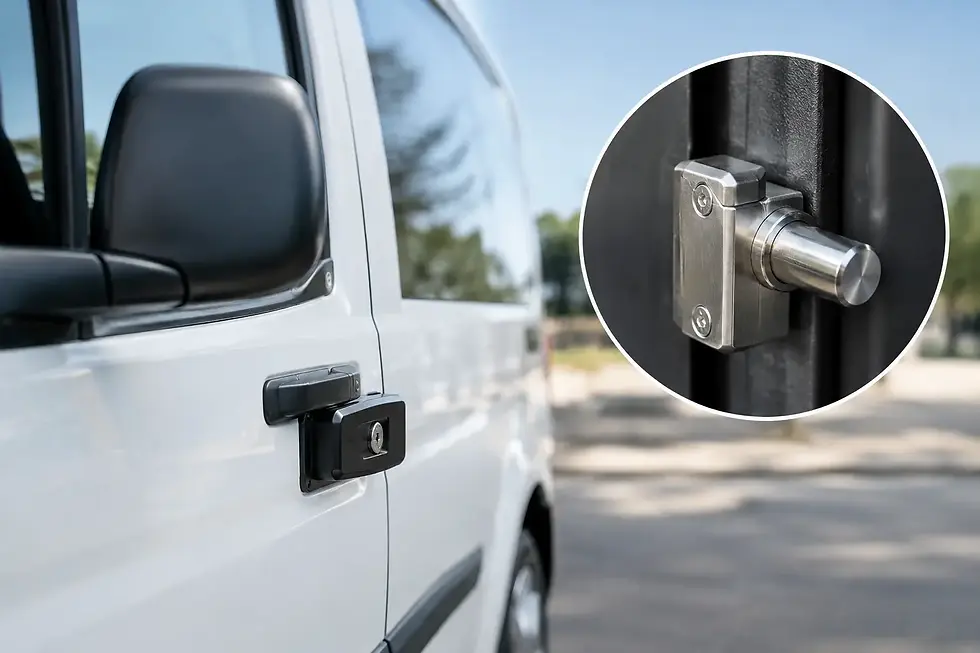
A properly designed system normally combines a secondary deadbolt with targeted anti-peel protection. The deadbolt provides an independent mechanical hold between the door and vehicle body. Anti-peel hardware supports vulnerable door sections and restricts how far the door can be pulled away from the van.
This matters because factory central locking can be a single point of failure. If an attacker compromises the factory lock, gains access to a key signal, or damages the original latch, a separate deadbolt still holds the door shut. Independent security is the difference between relying on one system and forcing an attacker to defeat another physical barrier.
Independent deadbolts
A secondary deadbolt should lock directly between a fixed vehicle structure and the door. It should not depend on the factory actuator staying intact or the original latch remaining engaged. When the primary locking system is attacked, the deadbolt remains the physical stop.
Remote-controlled deadbolts can be especially useful for working vans because they provide daily convenience without giving up physical security. The key is not simply remote operation. The system needs secure electronic control, reliable engagement, and a mechanical bolt arrangement designed to resist force at the door edge.
Choose hardware made for your specific van model and door layout. A universal kit may appear cheaper, but poorly located reinforcement can introduce weak mounting points, interfere with trim, or fail to support the area being attacked. Model-specific hardware is usually the cleaner and stronger option.
Anti-peel brackets
Anti-peel brackets are designed for the sliding side door, where leverage attacks often begin at the upper corner or front edge. They reinforce the relationship between the door and body so the door cannot be pulled outward as easily.
The bracket must sit in the correct position to be effective. It should not obstruct normal door travel, create rattles, or leave an obvious exterior point that can itself be attacked. Well-engineered brackets work from concealed or protected positions and support the door where force is actually applied.
There is a trade-off. Heavy external hardware may look intimidating, but it can advertise that expensive equipment is inside. Discreet reinforcement avoids adding a visible target while still improving resistance where it counts.
Reinforce the Door, Not Just the Lock
A lock is only as strong as the structure around it. Thin sheet metal can deform before a good lock fails, which is why mounting strategy matters.
The strongest installations use solid attachment points and spread the load across appropriate sections of the door and body. Reinforcement plates, brackets, and fasteners should work together rather than concentrate force on one small area. If a crowbar pushes against a door seam, the door should be supported by more than the original latch and a thin skin panel.
Avoid improvised reinforcements such as loose interior plates, generic hasps, or hardware-store bolts fitted without regard for the door’s structure. These can create corrosion points, snag cargo, obstruct door movement, or provide a thief with a better leverage point. They may also affect vehicle warranty coverage or lease return requirements.
A clean installation should preserve normal use. The doors should close without slamming, factory locks should still operate as intended, and emergency access procedures should remain clear to anyone authorized to use the vehicle.
Choose the Right Protection for Each Door
Rear cargo doors and sliding side doors are not exposed to the same attacks. Treating them as identical can leave a gap in your security plan.
Rear doors often need protection against latch-side prying and forced separation between the two doors. A deadbolt system that physically secures the door to the body provides a serious upgrade over standard locking alone. For vans carrying high-value tools, rear-door protection is usually the first priority because it is a direct route to the cargo area.
Sliding doors need attention at both the lock area and the peel-prone upper edge. An independent deadbolt can stop the door from opening normally, while anti-peel brackets reduce the chance of creating a large gap through leverage. On many vans, using both is more effective than relying on either one in isolation.
If your van has glazed rear doors, consider whether the glass is also an access risk. Reinforcement will not prevent a window smash, although it can stop a broken window from becoming an open door. Security is strongest when it accounts for every realistic route into the load space.
Installation Details That Affect Security
The quality of the hardware matters, but fitting matters just as much. A poorly aligned deadbolt can bind, fail to engage fully, or wear prematurely. A bracket mounted slightly out of position may not support the door at the critical moment.
Before installing, inspect door alignment and hinges. If the door is already sagging, rubbing, or difficult to latch, correct that issue first. Reinforcement hardware should be fitted to a door that closes correctly, not used as a workaround for worn hinges or accident damage.
Use the supplied mounting hardware and follow the vehicle-specific fitting procedure. Do not substitute bolts simply because they fit the hole. Fastener grade, length, thread engagement, and washer placement all affect how the load is distributed during an attack.
After installation, test every operating mode. Lock and unlock the system repeatedly. Open and close the door under normal use. Confirm that the bolt fully engages, the remote operates consistently, and the factory locking system is not obstructed. Recheck fasteners after the first period of regular use, particularly on fleet vans that operate over rough roads.
Do Not Let Daily Habits Defeat the Hardware
Reinforcement is only effective when it is used every time the van is left unattended. That includes short stops at supply houses, job sites, gas stations, and driveways. Tool thieves often work quickly and look for the easiest opportunity, not necessarily the most isolated vehicle.
Keep the cargo area organized so expensive equipment is not visible through windows or left near a door where it can be grabbed through a small gap. Mark and record tool serial numbers. Park where side doors are harder to access when possible, and use lighting or cameras as additional deterrents. These measures do not replace physical security, but they reduce opportunity around it.
For fleets, make locking checks part of the end-of-shift routine. Drivers should know how to confirm a secondary deadbolt is engaged, what to do if a remote is lost, and who is responsible for reporting door damage immediately. A damaged door seam is not cosmetic if it affects the security of the load area.
Van Security Systems focuses on this type of independent, concealed physical protection because thieves attack weaknesses in factory door security, not product brochures. Select hardware built for the door you have, fit it correctly, and make it part of how you secure the van at every stop. The best time to reinforce a vulnerable door is before a crowbar finds it.


Comments